
Seasonal Storage for Winter Texans and Second Homes
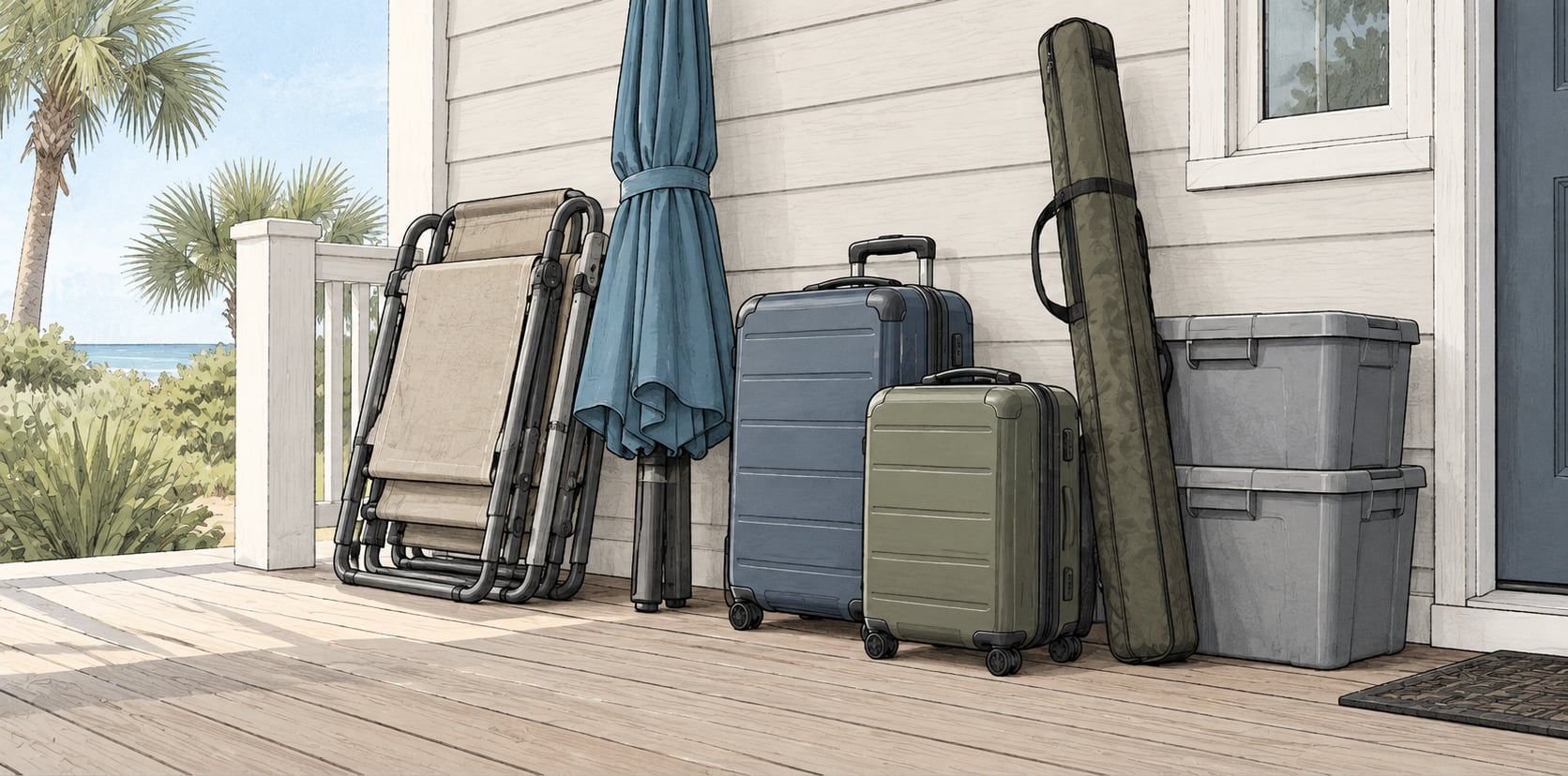
Some things are only needed for part of the year: the patio set and the beach chairs for the months on the coast, the holiday boxes for a few weeks in winter, the spare linens for a house that's lived in by season. Seasonal storage gives them a place to wait while the other season runs, so they come back out clean and ready when it's their turn.
We're a family-owned business renting storage units in Rockport, Texas, where Winter Texans arrive in October and November and second homes fill and empty with the seasons. There's a nice feeling in pulling into town for the season and finding everything you need packed and waiting.
Snowbird storage
Snowbird storage is a unit that holds your coastal life while you're away. For Winter Texans, that's the summer, when they're up north: the patio furniture, the bikes, the fishing gear, the kitchen things and the linens from the winter rental, packed in spring and picked up again in the fall.
It works the same as any storage rental, timed around your travel. You rent the unit, put your own lock on the door, and come and go during the gate hours. When you're in town you can reach it any day of the week, and when you're away it waits for you.
How long you keep it depends on the lease. A storage lease can set a minimum term, so ask about it before you sign, wherever you rent. Our storage units are rented on a lease that continues month to month once its minimum term is met, and the rental carries on from one month to the next until it's ended in writing. There's nothing to renew while you're gone.
Our gate is open 5 AM to 10 PM, seven days a week, so an early start before a long drive north or an evening arrival after a long drive south both fit inside it. Every one of our units is at ground level.
What should I consider when storing seasonal items?
When storing seasonal items, consider four things: how long they'll be stored, what they're made of, how you'll manage the unit from away, and what they need before they go in.
How long matters because a summer away on the Texas coast covers part of hurricane season and the hottest months. What they're made of matters because some materials react to heat and cold. Wood furniture, photographs and papers are among them, and our post on climate-controlled storage goes through which belongings need it.
Managing from away matters because you'll want to rent, pay and keep in touch without being in town. And what they need before they go in is the part most worth your time: clean, aired out, packed so you can find things, and listed.
Renting and managing a unit from out of town
You can rent before you arrive or after you've left, and our post on moving storage covers a move to Rockport with a unit in the middle. Our online rental runs in three steps, Select Storage Unit Size, Enter Billing Info and Confirm Information, and you read and sign the lease on your phone.
If you rent online, your gate code is emailed to you after you finish, and it works right away. Keep a note of the code somewhere other than your phone too, with the building letter and unit number beside it.
Make sure the rent keeps arriving while you're gone. Ask how the storage company takes payment and whether a card on file can be charged each month, and put the card's expiry date on your calendar so a new card goes on file before the old one runs out.
Keep your address, email and phone number current with the storage company, in writing, and give an email you'll check while you travel. Under Section 59.043 of the Texas Property Code, a storage company's notices go to the last known email or postal address given in the rental agreement or in a later written notice from the tenant. Our post on storage auctions in Texas explains how those notices work.
Before you rent from away, ask any storage company the same few things: the gate hours and the phone hours, how the gate code reaches you, how notices are sent, how rent is paid, and how much written notice ends the rental. Write the answers down with the unit number. Our posts on gated storage units and how to choose a storage unit go through each one.
Questions from far away take one call. Emilio answers the phone 8 AM–5 PM Monday–Saturday, and we respond to every message during those hours.
Patio furniture storage between seasons
If your patio furniture comes in for part of the year, it goes in clean, whichever season it's put away for.
Brown Jordan's care guide for its furniture says to clean all furniture before storing to prevent stain set and material breakdown, and to clean cushions with mild soap and water, rinse them thoroughly and let them air out standing upright. It also suggests a coat of clear automotive wax on its metal frames two or three times a year against sun and salt air, more often on the coast.
Stack the chairs seat to seat with a towel between them, take the table apart if it's made to come apart, and bag the hardware with the table. Cushions go in last, on top, where nothing heavy will crush them.
Measure the table and the longest pieces before you choose a size, and count the chairs as stacks. A patio set of a table and four chairs takes much less floor than its look suggests once the chairs are stacked.
Sizing a seasonal load
Seasonal loads are mostly stacks and folded things, so they need less floor than a household. Here's one coastal summer's worth, worked out by floor:
| Item | How it's stored | Square feet |
|---|---|---|
| Patio table | Legs off, top on edge | 3 |
| Four patio chairs | Two stacks of two | 8 |
| Two bikes | Standing along a wall | 12 |
| Four folding beach chairs | Folded, leaning together | 2 |
| Two coolers | Lids open, side by side | 5 |
| 12 lidded totes | Three high, four stacks | 15.5 |
That comes to about 46 square feet, inside a 5x10's 50, and our post on 5x5 and 5x10 storage units covers the small sizes. The totes are Sterilite's 27-gallon Industrial Tote, which measures 28 1/2 inches long and 19 5/8 inches wide on the outside, so each stack covers just under 4 square feet.
If it's holiday boxes and nothing else, a 5x5 may be all you need. Our Size Guide gives it as 25 square feet, about the size of a large closet, with room for boxes and a few small things. A winter rental's full household is a bigger list, and our post on what size storage unit you need for a 1-bedroom works one through.
Linens, towels and beach gear
If you run a short-term rental, vacation rental storage holds the spare sets, the guest supplies and anything you take out of the house while it's rented. The sizing table above shows how a load like that adds up.
Wash linens and towels before they're stored, and fold them loosely. The Canadian Conservation Institute's notes on storing textiles flat say to keep folding to a minimum. Bins with lids keep sets together, and a label on two sides tells you which bin is which bed.
Beach chairs, umbrellas and coolers go in rinsed of salt and sand and fully aired out, with the cooler lids left open.
If a small refrigerator from the winter rental is going in, GE Appliances' storage advice for one going out of use for more than a month is to remove all the food, unplug it, clean the inside, wipe it out and leave the doors open. Bikes go in rinsed and wiped down, standing along a wall. Measure each bike from wheel to wheel and across the handlebars before you plan the floor.
How to store seasonal decor
The best way to store seasonal decor is sorted by holiday, wrapped piece by piece, and packed in boxes or bins you can label and stack. Ornaments go in their original boxes or in divided bins, each one wrapped, with the heaviest pieces at the bottom.
Check the lights before they go into storage, and again before they go back up. The U.S. Consumer Product Safety Commission's holiday decorating advice is to check each set of lights, new or old, for broken or cracked sockets, frayed or bare wires, or loose connections, and to throw out damaged sets. Wind each good set around a piece of cardboard so it comes back out untangled.
An artificial tree goes back in its box or in a tree bag, and a wreath goes in a round box with nothing on top of it. Inflatable decorations need to air out completely before they're folded, so set them up indoors for a day after the season if they've been rained on.
Take the batteries out of battery-operated decorations before they're packed. Batteries are never stored with us, so they go home with you.
Candles need the same thought. The Canadian Conservation Institute's page on incorrect temperature lists candles, soaps and wax seals among the things that soften and deform for good when they get too warm, so keep them with you over the summer, or in a climate-controlled unit.
Label every box on two sides with the holiday and what's inside, and keep the boxes for the next holiday nearest the door.
Your lock, between visits
Bring your own lock, and look after it between seasons. Master Lock's care advice is to clean and lubricate a padlock every 3 to 6 months, and every three months where it's used in dusty or corrosive conditions, with the lubricant applied sparingly. On the coast, a quick coat when you arrive in the fall and again before you leave in spring keeps it opening easily.
Keep the key or the combination with your travel papers, so it goes where you go.
A second home on the coast
If you drive down to a second home from San Antonio or farther, the gate's 5 AM opening lets you stop at the unit before the drive back. A unit near the house can hold the things that make it home, the family photos, the personal kitchen things, the closet of beach clothes, while the house is rented or closed for the season.
Keep a list of what goes to the unit and what stays in the house, and photograph each room before the season starts. The Texas Department of Insurance's home insurance guide suggests photographing each room and opening drawers to photograph what's inside, and says to update your list regularly.
Check your insurance for both places. The Texas Department of Insurance's page on storage units says a home or renter's policy probably gives you some coverage for things stored away from home, usually limited to 10% to 20% of your personal property limit, and suggests telling your agent what you have and where you keep it. Our post on renters insurance and storage units goes through the questions to ask.
Using the unit while you're in town
During the season, the unit is where the things you swap out live. The holiday boxes come out in December and go back in January, the heavier jackets come out for a cold front and go back when it passes, and the beach chairs rotate with the weather.
Cold snaps are rare here, but they do come. NOAA's records for the Corpus Christi airport, southwest of Aransas County, average 6 nights a year at 32 degrees or below, so keep a box of warm things where you can reach it.
Keep the things you rotate nearest the door, and the things that wait all season at the back. Every visit fits inside the gate hours, from 5 AM until 10 every night.
Leaving in spring
The last week before the drive north is when the unit earns its keep. Bring in the patio furniture and the beach gear once they're cleaned and aired out, load the holiday boxes at the back, and put the things you'll want first in the fall nearest the door.
Before you leave town, take anything that reacts to heat home with you or make sure it's in a climate-controlled unit, check that your lock is on and turning easily, and photograph the unit from the door. Email yourself the list and the photos, set the card's expiry date on your calendar, and make sure the storage company has the email you'll check over the summer.
The summer away: hurricane season
A summer away from the coast falls in hurricane season, which the National Weather Service says runs from June 1 to November 30 each year. Plan for it in spring, before you leave. It's the hot part of the year too: NOAA's climate normals for the Corpus Christi airport, southwest of Aransas County, give a normal daily high of 91.6 degrees in June, 93.7 in July and 95 in August.
Ready.gov advises making sure your insurance policies and personal documents are up to date, and the Texas Department of Insurance's storage page adds that you'll need a separate policy for flood damage. Keep your list and photos in your email as well as on your phone. Our post on hurricane storage on the Texas coast covers what to do when a storm is coming.
Coming back in the fall
Open the door and let the unit air out for a few minutes before you start. Check your list against what you see, and look the boxes over. The Canadian Conservation Institute's notes on storage areas suggest briefly inspecting stored objects to make sure they're adequately covered, well supported and in their proper places.
Air out the cushions and linens before they go back into use, and check the lights again before they go up. Check the bike tires and give the chains a wipe before the first ride of the season. Our post on how to prevent mold in a storage unit goes through what to look for.
A seasonal checklist
- Ask about the minimum term, then rent online before you leave or before you arrive.
- Clean the patio furniture, wash the linens, rinse the beach gear and let everything air out.
- Check the holiday lights and take the batteries out of decorations.
- Pack by season and by holiday, label each box on two sides, and list it.
- Photograph the rooms and the boxes, and email the list to yourself.
- Set up the rent to keep arriving, and note the card's expiry date.
- Give the storage company an address and an email you'll check while you're away.
- Put the boxes you'll want first nearest the door.
Seasonal storage with us in Rockport
Rockport sits between Aransas Bay and Copano Bay, and 298 of our 558 units are climate-controlled. Our climate-controlled units are interior units on an HVAC system, held within a steady temperature range. Our drive-up units open onto the drive aisles, where you park at your unit door and unload a few steps, and the Climate-Controlled page covers the interior units.
Siyata Storage is at 825 W Market Street. Some older listings show 835 — that is a separate private building next door, not us. Directions are on our Contact page, and our Areas We Serve page covers the towns nearby.
The rate for every size we have open is on our price list. Our post on long-term storage covers stays of many months, and the one on how to rent a storage unit goes through the lease and moving out.
Tell us what you're storing and we'll help you pick a size. Call 361-200-1492, 8 AM to 5 PM Monday to Saturday. Hablamos español.