
Climate-Controlled Storage: What It Is and Who Needs It
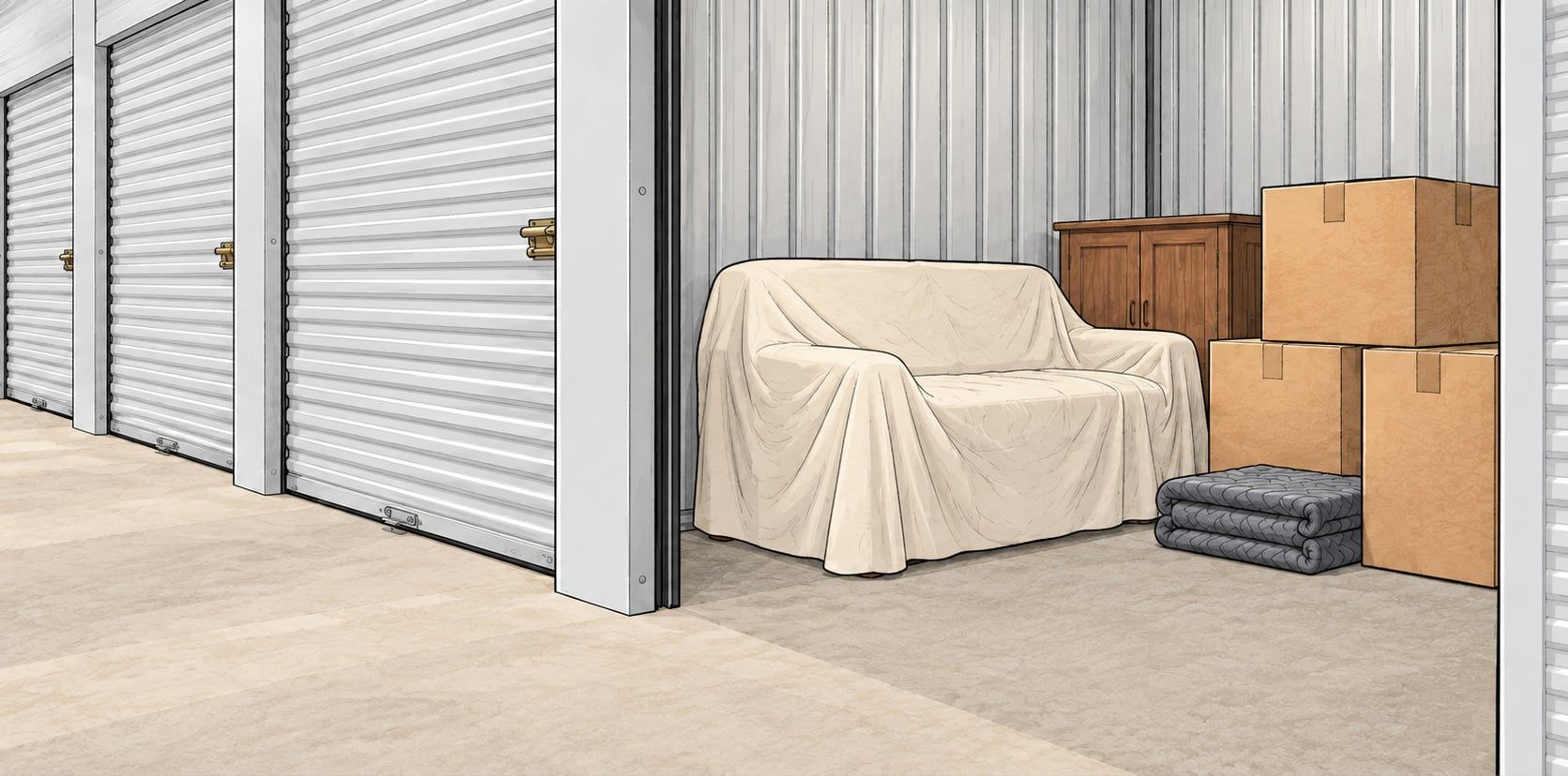
Somewhere in the middle of packing up a house, you pick up something you'd hate to lose and stop to think about where it's going to spend the next few months. It might be the dresser you've had for years, a shoebox of photographs, a guitar, or the television from the front room. That's usually when climate-controlled storage comes up, and what you want to know is whether this particular thing needs it.
We're a family-owned business renting climate-controlled storage units and drive-up units in Rockport, Texas, and we'd like each of your things to end up in the kind that suits it. That comes down to what each thing is made of and how long it'll be there, with the Gulf Coast weather in the background the whole time.
What is climate-controlled storage?
Climate-controlled storage means a storage unit whose temperature is managed for you, and you'll also see it called temperature-controlled storage. Our climate-controlled units are interior units on an HVAC system, held within a steady temperature range. Each one is an indoor storage unit, and you reach it through the building entrance.
There's climate-controlled storage right here in town. Rockport sits between Aransas Bay and Copano Bay, and 298 of our 558 units are climate-controlled. The property has eleven single-level buildings that went up between 2017 and 2025.
What a drive-up unit is
If you've been searching for regular storage, the unit you have in mind is what we call drive-up. Its door opens straight onto a concrete drive aisle, so you park at your unit door and unload a few steps.
On a big moving day, when you're tired and half the boxes are still waiting, that short carry counts for a lot. Drive-up units suit hand tools, garden gear, patio furniture and boxes of household goods that'll be going back out before long.
For a tall piece, like a wardrobe or a tall headboard, measure it before moving day and check it against the height of the unit's door, because the door is what decides whether it goes in standing up.
What items need climate-controlled storage?
The items that need climate-controlled storage most are the ones made of materials that react to heat and cold, or to sudden changes in temperature. That covers:
- wood furniture
- pianos and guitars
- photographs and papers
- paintings
- old tapes and discs
- anything with rubber or foam in it
- candles
- televisions
Wood furniture belongs in climate-controlled storage, especially any piece that's glued together. The Canadian Conservation Institute, a Government of Canada agency, warns that heat softens white glues until they lose their strength, and that pieces of wood joined with them can come apart.
A guitar is wood and glue too, and Taylor Guitars tells owners to keep one in its case when you're done playing, out of direct sunlight and away from extremes of heat and cold, and to check on it regularly for any big changes.
A piano belongs in a climate-controlled unit, since its wooden cabinet and its metal strings both react to changes in temperature. Yamaha's care guide for its Disklavier pianos says the wooden cabinet must be kept out of direct sunlight, and it warns that excessive heat can damage the finish and internal parts.
The same guide says that when a cold room is warmed suddenly, moisture can condense on the strings and other metal parts and make them rust. It asks owners to be especially careful about sudden temperature changes when they move a piano into a room in a cold climate.
The Library of Congress says that with color photographs and film negatives, temperature is the controlling factor in how long they stay stable. It recommends keeping them out of attics and basements and away from vents, radiators and anywhere with a high risk of condensation or big swings in conditions.
Videotapes and audio tapes sit in the Canadian institute's most temperature-sensitive group, alongside the least stable color prints, which fade even in the dark. The same group takes in rubber and foam, which can turn brittle or sticky, so look over foam cushions and anything with rubber parts as you pack them. High heat also warps plastic tape cassettes and discs such as CDs and DVDs, quickly and for good.
If your wedding video or a box of old cassettes is packed away somewhere, it belongs on the climate-controlled side of the move.
For old letters and papers, the National Archives tells families that the lower the temperature, the longer they'll last, because cooler temperatures slow the rate of chemical decay, and it advises keeping them out of hot attics.
Paintings react to the cold as well as the heat. Some acrylic paints on some canvases yellow quickly, and the institute puts them in the same group as the tapes. It also says that many materials made to be tough at room temperature turn stiff or even brittle as the temperature drops, modern paints especially, so a painting gets much more likely to crack when it's handled.
That change comes sooner and more sharply with acrylic paintings than with oil paintings, and the institute warns that even a quick run in a cold truck can leave a lightly wrapped painting much more brittle than you'd expect, just as it's bumping against the walls and floor. On a cold moving day, wrap paintings well and stand them where they'll stay put.
Candles, and anything else made of wax, soften and lose their shape in heat, and waxy mixtures can separate or form a bloom as well, so a boxed-up collection of them belongs in climate-controlled storage.
Do TVs need climate-controlled storage?
Yes, a TV belongs in climate-controlled storage, and Sony's own manuals show why. The operating instructions for one of its LCD TV lines tell owners to install the set away from hot places. The help pages for one of its BRAVIA models say that carrying a TV from a cold place to a warm one, or a sudden change in room temperature, can cause moisture condensation that leaves the picture blurry or the color poor.
The help guide for one of Sony's projector lines gives the same warning about a projector moved suddenly from a cold place to a warm one, so a home theater projector belongs with the TV.
The EPA explains that when warm, humid air touches a cold surface, condensation may form, and the National Weather Service describes the dew point as a measure of the moisture in the air.
The dew point is the temperature the air would have to fall to before it's saturated, and the higher it is, the more moisture the air is carrying. A surface colder than that gathers water, the way a glass of iced tea does on a hot day.
If the TV comes into a house that's warmer than where it's been, give it a few hours before you switch it on, which is the wait Sony asks for to let the moisture evaporate. Sony's manual for that LCD line says carrying the TV takes at least two people, holding it by its top and bottom frames. Take the batteries out of the remote before you pack it, and leave them at home.
Summer heat and winter cold on the Texas coast
In Rockport and anywhere else on the Texas coast, you need climate-controlled storage for wood furniture, paper, photographs and TVs that'll sit through a long, hot summer or a few cold winter nights.
If you've spent an August in Rockport, you know how early the heat gets going and how late it hangs on. NOAA keeps long weather records for the Corpus Christi airport, southwest of Aransas County. Its climate normals for 1991 to 2020 put the average August high there at 95 degrees Fahrenheit, and its records from 1948 through 2023 average 114 days a year that reach 90 degrees or more.
Most of those hot days come between June and September, about 28 each in July and August. The average August low at the airport is about 76 degrees, so the nights stay warm too.
Winter brings cold nights, and the same normals put the average January low there at 48 degrees, with the records averaging 6 nights a year at 32 degrees or below. On one of those cold mornings, a TV carried from the truck into a warm house goes through the sudden change from cold to warm that Sony writes about.
Do I need climate-controlled storage?
You need a climate-controlled storage unit when what you're putting away reacts to heat, cold or swings in temperature, and the longer it'll stay, the more that counts.
Time matters because the decay that heat speeds up keeps adding up. The Canadian Conservation Institute says much of the paper, photographic material, rubber and plastic made since the mid-1800s breaks itself down chemically within a single lifetime. A box of photographs or tapes coming back out in three weeks has a short stay ahead of it, and one that'll sit through a summer and a winter has a long one, which points toward a climate-controlled unit.
Our post on long-term storage goes into stays of several months.
For a stay of a few weeks, it depends on what you're storing. A TV or a piano can meet a sudden change in temperature in its first week as easily as in its tenth, which is why the makers' warnings hold for short stays too.
You can also use both kinds. If most of what you have is boxes and tools, with a handful of pieces that matter to you, those few can go in a climate-controlled unit and the rest in a drive-up unit.
Say the house is being worked on over the summer and everything has to come out for a while. The dining table, the dressers, the boxes of photographs and papers, the guitar and the TV would go into a climate-controlled unit. The patio set, the yard tools and the boxes of pots and pans could go into a drive-up unit, ready to come back out when the work is done.
If you're torn about one particular piece, call 361-200-1492 and describe it. Emilio answers the phone 8 AM–5 PM Monday–Saturday, and we respond to every message during those hours.
Before you rent a climate-controlled unit
Before you rent climate-controlled self storage anywhere, ask a few plain questions and write the answers down as you go. Three places on the phone in one afternoon start to run together, and a few lines on paper keep them straight.
Ask the company to describe its climate control in plain words, whatever it calls it, and to show it to you in writing before you sign. Ask whether the unit is reached from inside a building or opens onto the drive, so you can picture how move-in day will go.
Ask how tall the ceiling is, and then how tall the way in is. Find out how you get in and whether each renter has their own code. Then ask who answers the phone, and during which hours, because that's the person you'll be calling when you need something. Our post on how to choose a storage unit turns these questions into a checklist.
Getting things ready before they go in
Along this coast the air carries a lot of moisture. NOAA's long record for the Corpus Christi airport, from 1948 to 2018, has the average morning relative humidity running from 85 percent in December to 93 percent in June and July, with afternoons averaging 61 percent over the year.
Leather and fabric, which means clothes, quilts, rugs and the upholstery on a sofa, are among the materials the Canadian Conservation Institute says damp leaves open to mold, and the EPA's guide to mold says every kind of mold needs water or moisture to grow. Make sure everything is clean before it's packed, and let cushions and anything that's been outdoors air out completely first.
The EPA's guidance is that anything wet from a leak or a spill should be dried within a day or two, which keeps mold from growing in most cases, and that's a good standard for anything that gets rained on during the move, before it goes in.
For furniture, take the legs off a table if they unscrew and keep the screws in a bag taped to the underside. Where two pieces touch, put a folded furniture blanket between them.
Before the photographs go in, the Library of Congress's advice is to put the prints in folders or sleeves, which keep off dust and light, and to keep them in boxes made for storing photographs. It also says to leave paper clips, rubber bands, tape and glue off them, and to handle a print by its edges with clean hands.
For papers, the National Archives suggests a box big enough to hold them flat or upright without folding or bending, with a spacer board to fill out an upright box that's only partly full. The Library of Congress says to stand records and discs on edge and cassettes on their long edge.
Leave food, gas cans and propane tanks at home. Pack for the visits you'll make later, with the things you'll want often near the door and the things you're putting away the longest at the back.
Keep a list of what's in each box as you go, and tape a copy inside the lid of the first box you'll see when the door opens. Label each box on the top and on two sides, so you can read it however it's stacked. Then come and look things over every so often, and air out anything that needs it.
Our posts on storing furniture in a storage unit, packing for storage and preventing mold in a storage unit on the Texas coast go into each of these in more detail.
Getting in and out of a climate-controlled unit
Every unit on the property is at ground level, and the buildings have ramps at their entrances. With a climate-controlled unit, roll the heavy pieces up the ramp and inside on a hand truck or a furniture dolly.
You'll have your own gate code, and you can get in from 5 AM until 10 every night, seven days a week. If you rent online, your gate code is emailed to you after you finish, and it works right away.
If moving day falls in a summer heat wave, follow the National Weather Service's advice, which is to save strenuous work for the coolest time of the day, wear lightweight, loose, light-colored clothing, and drink plenty of water even before you feel thirsty.
The climate-controlled buildings have an after-hours alarm with live monitoring that alerts police, and it's set shortly after 10 PM, so plan to finish up inside the building before then.
Where to find us in Rockport
Siyata Storage is at 825 W Market Street. Some older listings show 835 — that is a separate private building next door, not us. The rate for every size we have open is on our price list, and directions are on our Contact page.
When a move is already wearing on you, it's a relief to know where the dresser and that shoebox of photographs are going before the truck is loaded.
Tell us what you're storing and we'll help you choose between climate-controlled and drive-up. Call 361-200-1492, 8 AM to 5 PM Monday to Saturday. Hablamos español.