
How to Prevent Mold in a Storage Unit on the Texas Coast
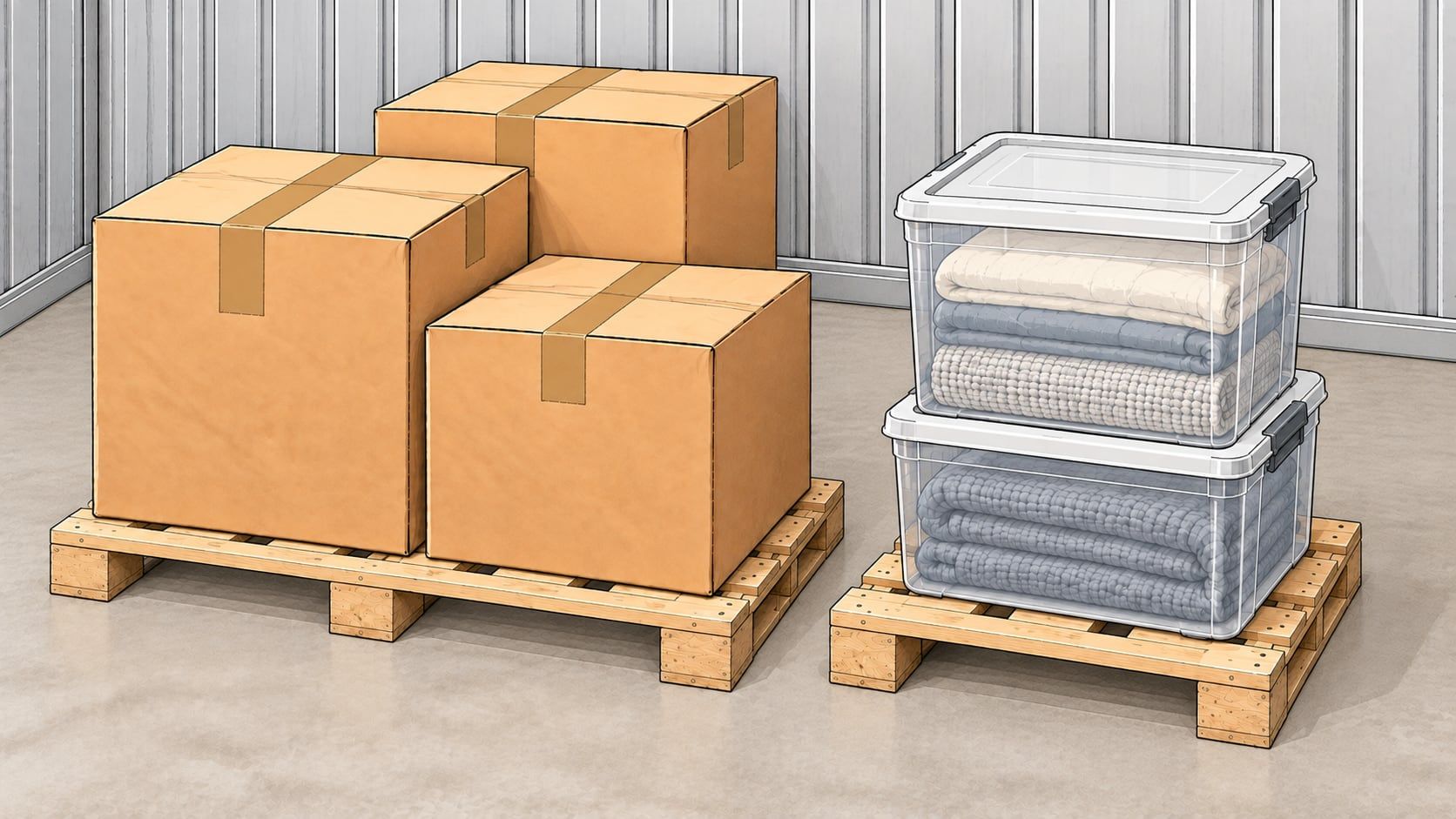
How to prevent mold in a storage unit comes down to moisture, and most of the work happens before anything goes in. Store things clean and completely aired out, pack fabrics and papers in lidded bins, lift everything off the floor, leave space for air to move, and look things over when you visit. On the Texas coast, where the air carries a lot of moisture through much of the year, those steps count for even more.
We're a family-owned business renting storage units in Rockport, Texas, where the Gulf air is part of everyday life. What follows is how to stop mold and mildew in a storage unit with what you do yourself, wherever you store. There's a quiet relief in opening a unit after a long summer and finding everything just as you packed it.
What mold needs
Mold needs moisture. The EPA's guide to mold and moisture says there are many types of mold, and none of them will grow without water or moisture, and that the key to mold control is moisture control.
It also needs something to grow on. The EPA's mold course says mold can grow on virtually any organic material as long as moisture and oxygen are present, and it lists wood, paper, carpet, food and insulation among them. Furniture, books, boxes and rugs are all on that list one way or another.
That puts most of prevention in your hands. Whatever goes into a box damp brings its own moisture with it, and a box packed tight against a wall gives that moisture nowhere to go. The rest follows from those two ideas: put nothing in damp, and give air room to move.
Moisture can also come out of the air onto a cold surface. The same EPA course explains that when warm, humid air contacts a cold surface, condensation may form. On the coast, that's a reason to let things that come out of a cold truck or a chilly room sit until they've reached the temperature of the air around them before you box them.
The National Weather Service describes the dew point as a measure of the moisture in the air, and says a higher dew point means more moisture is present. On a muggy coastal morning, a box carried straight from a chilly car can collect moisture on its outside the way a glass of iced tea does.
Before anything goes in
Start with clean, fully aired-out belongings. The EPA says that if wet or damp materials have the water out of them within a day or two after a leak or spill, in most cases mold won't grow, so anything that's been wet needs that time before it's packed, and longer if it's thick.
Wash clothes, towels and bedding, and let them air out completely. Clean furniture before it's stored: Brown Jordan's care guide for its furniture says to clean all furniture before storing to prevent stain set and material breakdown, and to wash cushions with mild soap and water, rinse them and let them air out standing upright.
Empty and clean appliances. GE Appliances' storage advice for a refrigerator going out of use for more than a month is to remove all the food, unplug it, clean the inside, wipe it out and leave the doors open. Leave the lids of coolers open, and the doors of a washer and dryer.
Rinse beach chairs, umbrellas and fishing gear of salt and sand and let them air out for a day indoors. Wipe tools and bikes clean. Food, gas cans and propane tanks are never stored with us, and anything with a fuel tank needs our written permission before it goes in.
If something already smells musty, clean it and let it air out completely before it goes in, or leave it out. Set up a tent, a tarp or camping gear after its last trip and let it air out for a day before it's folded.
Pack close to moving day, so boxes don't sit for a week in a muggy garage before they go in. Keep wet and absorbent things apart while you pack. A damp towel tucked into a box of books carries its moisture to every page around it, so anything you're not sure about waits a day.
Moving day on a humid day
Pick a clear day to move if you can. Keep the boxes closed and covered in the truck, carry them straight into the unit, and set nothing down on wet pavement.
If it rains while you're unloading, wait it out under cover rather than carrying wet boxes in. Anything that does get wet goes home to air out and comes back another day. Every one of our units is at ground level, so a hand truck takes each load from the truck to the door without a step.
What can I put in my storage unit to prevent mold?
Put in the things that keep your belongings off the floor, covered loosely and apart from each other: pallets or a few boards to stand boxes on, plastic bins with lids for fabrics and papers, and clean cotton sheets to drape over furniture.
Pallets or boards lift the bottom boxes so air can move under them.
Leave a little room in each bin rather than pressing the contents tight. Bins with lids keep fabrics and papers together and close the box against dust, and cardboard is paper, which the EPA lists among the things mold grows on. A cotton sheet keeps dust off a piece of furniture and lets it breathe, which is what the National Park Service's guidance on upholstered furniture has in mind when it suggests clean cotton sheets as covers.
Leave out the airtight wraps. Sealy's storage advice is to store a mattress as flat as possible with little to nothing stacked on top, and while it says you may wrap a mattress in plastic if you wish, it doesn't recommend airtight packaging or vacuum-sealing.
For small metal things such as hand tools, coins or old hardware, a sealed container with silica gel packets is one option. The Canadian Conservation Institute's notes on silica gel describe silica gel in a closed container as a way to keep the air inside it low in moisture and slow down or halt corrosion of metal objects.
How to keep furniture from molding in storage
To keep furniture from molding in storage, store it clean, take it apart where it's made to come apart, cover it with cotton, lift it off the floor and keep it away from the walls.
The Canadian Conservation Institute's basic care guide for wood furniture says to check furniture for damage or loose joints before moving it, and to remove objects from the surface and then remove drawers, shelves and doors. Taking a piece apart opens it to the air and makes it easier to place with space around it.
Vacuum upholstery gently before it goes in, and leave a little space between pieces so no two cushions are pressed together. Pieces with leather or fabric get the most care, since the Canadian Conservation Institute's page on humidity notes that damp causes mould, which disintegrates or discolours skin, leather, textiles, paper and basketry.
Stand dressers and tables on boards, and keep the drawers slightly open with a folded cloth so air moves through them. Our post on how to store furniture goes piece by piece.
Rugs, mattresses and books
Rugs go in clean. Vacuum both sides, let a washed rug air out completely before it's rolled, roll it with the pile facing in, and wrap it in a cotton sheet. Lay it along a wall on boards, where nothing heavy will sit on it. Wood that's just been wiped down gets an hour to air out before it's covered.
Mattresses lie flat on boards with a breathable cover, and with nothing stacked on top. Give a mattress its own patch of floor, so air reaches its sides.
Books go in small boxes or bins, standing upright as they would on a shelf, with the heavy ones at the bottom of the stack. Leave a little room in each box rather than wedging the last book in, and keep book boxes off the floor and away from the walls. Photo albums stand upright in a bin the same way.
What time of year is worst for mold?
On the Texas coast, the warm, wet months from late spring into early fall carry the most moisture in the air, and moisture is what mold needs.
NOAA's humidity records for Corpus Christi, southwest of Aransas County, show average morning relative humidity running from 85 percent in December up to 93 percent in June and July. NOAA's climate normals for the same station put September as the wettest month of the year, averaging 5.42 inches of rain.
That makes late spring the time to get things ready if they'll sit through the summer. Pack on a clear day rather than a rainy one, let anything that got wet on the way sit until it's aired out, and plan a visit after September's rains to look things over.
Papers, photographs, clothes and leather
Paper and fabric are among the materials mold grows on, so they get bins rather than cardboard, and boxes of papers sit on boards, never on the floor. The National Archives' advice on storing family papers asks for boxes big enough for the originals to lay flat or upright without folding or bending, with a spacer board when a box isn't full.
Clothes and linens go in clean and folded loosely. The Canadian Conservation Institute's notes on storing textiles flat say to keep folding to a minimum.
Leather shoes, bags and jackets go in clean, wiped down and fully aired out, with space around them in the bin. Keep the irreplaceable photographs and documents with you if you can.
Loading the unit so air can move
Load with air in mind. Set the boxes and bins on pallets or boards, leave a little space between the stacks and the walls, and keep a path down one side so you can reach the back.
Stack the heaviest boxes at the bottom and the lightest on top, and keep each stack straight and steady. Leave a little space above the top boxes rather than stacking right up to the ceiling. Put the things you'll check most often nearest the door.
Keep a list of what's in each box, and take a photo of the unit from the door once it's loaded. Our post on how to pack for storage covers boxes, bins and labels.
Checking the unit on visits
Visits are where small things get caught early. The Canadian Conservation Institute's notes on storage areas suggest briefly inspecting stored objects to make sure they're adequately covered, well supported and in their proper places.
Bring a flashlight and a clean cloth. Plan a visit at least once a season, and after a stretch of heavy rain; for a stay through the summer, plan one in midsummer and one after September.
Open the door and let the unit air out for a few minutes. Look at the boxes at the bottom of each stack, lift a cover or two, and use your nose: the EPA's mold course notes that you may suspect mold, even if you can't see it, if a building smells moldy.
If you find mold on something, the EPA's advice is to scrub mold off hard surfaces with detergent and water and then let them get completely clear of moisture, and it notes that absorbent or porous materials may have to be thrown away if they become moldy. It also suggests an N-95 respirator for the work. If a cover feels damp to the touch, take it home to wash and bring a clean one on the next visit.
Insurance and mold
Check your coverage before a long stay. The Texas Department of Insurance's home insurance guide says most home policies won't cover mold removal, except to repair damage caused by a covered risk, which is one more reason the work before packing is worth doing.
The same guide says a complete list of your property will help you decide how much coverage you need and will make filing claims easier. Keep the list and the photos of each box in your email. Our post on renters insurance and storage units goes through the questions to ask your agent.
Keeping pests out of a storage unit
Keeping pests out of a storage unit starts with the habits that keep mold away, from clean things to lidded bins. Food is never stored with us, and the EPA's advice for keeping pests away starts with making sure food and food scraps are tightly sealed and garbage is regularly removed.
Wash the dishes and wipe out the small appliances, the coolers and anything else that held food, so no scraps go in with them.
Check secondhand pieces before they go in. The EPA's bed bug advice is to check secondhand furniture, beds and couches for any signs of bed bug infestation before bringing them home, and the same check makes sense before a used piece goes into your unit.
On each visit, look at the corners, the bottom boxes and the backs of the furniture, and repack any box that's been damaged. We do quarterly pest control on the property.
After heavy rain or a storm
After a stretch of heavy rain or a storm, plan a visit to look things over once it's sensible to travel. Check the bottom boxes and anything near the door, and take out anything that needs to air out. If water has reached anything, take it home and get the water out of it within a day or two, as the EPA advises, before it goes back in.
Our post on hurricane storage on the Texas coast goes through what to move and when during the season.
Taking things back out
When things come out of storage, open each bin and let the contents air out before they go into drawers and closets. Wash anything that smells stale, shake rugs out outdoors, and set cushions and rugs out to air for a day. Leave the empty bins open for a day before you nest them away.
Check furniture for loose joints before you move it, as the Canadian Conservation Institute advises, and wipe the surfaces down. For a stay of many months, our post on long-term storage covers the rest.
A mold-prevention checklist
- Everything clean and completely aired out before it's packed.
- Anything that got wet given a day or two, or longer, before it goes in.
- Fabrics and papers in lidded bins, not cardboard.
- Boxes and furniture on pallets or boards.
- A little space between the stacks and the walls, and between pieces.
- Cotton sheets over furniture, and no airtight wraps on mattresses.
- Refrigerators and coolers cleaned out with the doors and lids open.
- A list, a photo of the loaded unit, and a visit on the calendar.
Storing on the coast with us in Rockport
Rockport sits between Aransas Bay and Copano Bay, and 298 of our 558 units are climate-controlled. Our climate-controlled units are interior units on an HVAC system, held within a steady temperature range. The Climate-Controlled page covers them, and our drive-up units open onto the drive aisles, where you park at your unit door and unload a few steps.
Our post on climate-controlled storage goes through which belongings need it.
Siyata Storage is at 825 W Market Street. Some older listings show 835 — that is a separate private building next door, not us. Directions are on our Contact page.
The rate for every size we have open is on our price list. Emilio answers the phone 8 AM–5 PM Monday–Saturday, and we respond to every message during those hours.
Tell us what you're storing and we'll help you pick a size. Call 361-200-1492, 8 AM to 5 PM Monday to Saturday. Hablamos español.