
Long-Term Storage: How to Store Things for Months
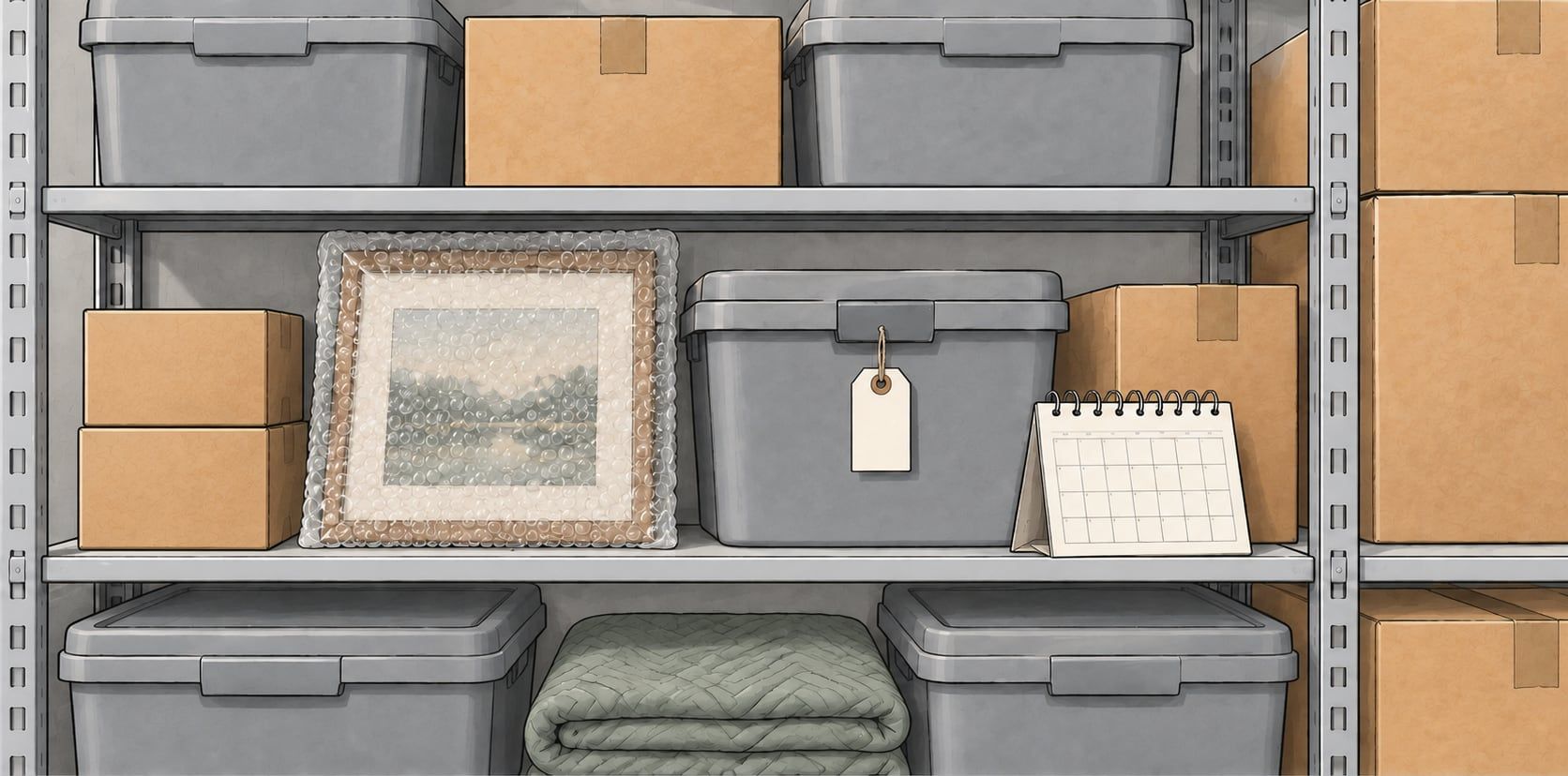
You'll be away for a while, or the things you own don't fit the life you're living for now, and they need a place to wait for months. Long-term storage is a storage unit kept for a long stretch, and the work you do before the door comes down decides how everything looks when you open it again.
We're a family-owned business renting storage units in Rockport, Texas. What follows covers getting things ready for a long stay, loading a unit you won't see for a while, and looking after it from a distance. There's a quiet satisfaction in closing the door on a unit packed with care and knowing it's ready to wait.
A long term storage unit, and how the rental runs
A long term storage unit is an ordinary self-storage rental kept for many months. You rent the unit, put your own lock on the door, and come and go during the gate hours whenever you're in town. Our post on what a storage unit is for covers what you can keep in one.
How long you can keep it depends on the lease. A storage lease can set a minimum term, so ask about it before you sign, wherever you rent.
Our storage units are rented on a lease that continues month to month once its minimum term is met, and the rental carries on from one month to the next until it's ended in writing. A long stay keeps going on its own, with nothing to renew while you're away.
Choosing where to keep things for months
The best option for long-term storage is the one that fits what you're storing, how long it will be away, and how often you'll need to get to it.
A spare room or a relative's garage works when the stay is short and the things are few. A storage unit suits a longer stay or a larger load, and it lets you reach your things on your own schedule, during the gate hours, with your own code and your own lock.
Decide by three things: what your things are made of, how long they'll be stored, and how often you'll need something out of them.
Wood furniture, pianos and guitars, photographs and papers are among the things that react to heat and cold, and our post on climate-controlled storage goes through which belongings need it.
How long can you keep furniture in storage?
You can keep furniture in storage for as long as the rental continues. How well it comes through a long stay depends on how it's cleaned, taken apart, covered and placed before the door closes.
Furniture should go in clean, and Brown Jordan's care guide for its own furniture says to clean all furniture before storing to prevent stain set and material breakdown. Wipe wood down, vacuum upholstery gently, and let cushions air out before they're packed.
Anything made to come apart is easier to store in pieces. The Canadian Conservation Institute's basic care guide for wood furniture says to check furniture for damage or loose joints before moving it, and to remove objects from the surface and then remove drawers, shelves and doors. Bag the bolts and brackets and tape the bag to the piece they came from.
A loose cover lets a piece breathe, and the National Park Service's guidance on upholstered furniture suggests clean cotton sheets as covers, and notes that dust is abrasive and over time can damage the finish of exposed wood. An old cotton sheet over each piece does the job.
A mattress is best stored lying down, and Sealy's storage advice is to store a mattress as flat as possible with little to nothing stacked on top, and it doesn't recommend airtight packaging or vacuum-sealing. Our post on how to store furniture goes piece by piece.
Getting everything else ready for a long stay
Pack everything clean and fully aired out. The EPA's guide to mold and moisture says there are many types of mold, and none of them will grow without water or moisture, so nothing goes into a box damp. Wash clothes and linens, and let anything that's been outside sit indoors until it's aired out before it's packed.
Clothes and linens keep best in bins with lids, folded loosely. The Canadian Conservation Institute's notes on storing textiles flat say to keep folding to a minimum.
Papers and photographs need the most thought over a long stay. The Canadian Conservation Institute's page on incorrect temperature notes that many products made from the mid-19th century onwards, paper, photographic materials, rubber and many plastics among them, chemically self-destruct within a single human lifetime. Box them with care, and keep the irreplaceable ones with you.
The National Archives' advice on storing family papers asks for boxes big enough for the originals to lay flat or upright without folding or bending, with a spacer board when a box isn't full.
Appliances need emptying and cleaning. GE Appliances' storage advice for a refrigerator going out of use for more than a month is to remove all the food, unplug it, clean the inside, wipe it out and leave the doors open.
Outdoor furniture goes in clean, too. Brown Jordan's guide adds that its metal frames take a coat of clear automotive wax two or three times a year against sun and salt air, more often on the coast, so a coat before a long stay is a good start.
Food, gas cans and propane tanks are never stored with us, and anything with a fuel tank needs our written permission before it goes in, a lawn mower included. Our post on how to pack for storage goes box by box.
A few things react to heat. The Canadian Conservation Institute lists candles, soaps and wax seals among the things that soften and deform for good when they get too warm, and says discs, tape cassettes and other plastic objects distort. For a stay that runs through a coastal summer, keep those with you, or in a climate-controlled unit.
What to keep with you
Some things are better kept close for a long stay. Keep important papers, medicine, jewelry and anything you couldn't replace with you, or with family you trust.
Batteries are never stored with us, so take the batteries out of a cordless drill, a lantern or anything else with a removable one, and keep them with you; the tool itself can be stored. Anything with a battery built in, such as a laptop, goes with you.
If something valuable does go into storage, the Texas Department of Insurance's page on storage units suggests thinking about adding coverage specifically for collectibles, art, furniture or other valuable items, and telling your agent what you have and where you keep it.
Loading a unit you won't see for months
Load the unit so you can find anything without unloading everything. Put the furniture and the boxes you won't need at the back, and the boxes you might want during the stay near the door.
Leave a path down one side, and leave a little space between the boxes and the walls so air can move around them. Set the boxes on pallets or a few boards rather than straight on the floor, and stack the heaviest at the bottom.
Draw a quick map of the unit on your phone as you load, with each box number where it sits. Months later, the map and the numbered list take you straight to the box you want.
Before you close the door on a long stay
- Everything clean and aired out, and nothing damp.
- Furniture taken apart where it's made to come apart, with the hardware bagged and taped to each piece.
- Cotton sheets over the furniture, and the mattress lying flat.
- Boxes off the floor, the heaviest at the bottom, with space between them and the walls.
- A path down one side, and the boxes you might need near the door.
- A numbered list, a map of the unit and photos, saved in your email.
- Your address, email and phone number current with the storage company, in writing.
- Rent set up to keep arriving while you're away.
- Your own lock on the door.
Keeping track of what's stored
Keep a list of everything in the unit, box by box, with photos. The Texas Department of Insurance's home insurance guide says a complete list of your property will help you decide how much coverage you need and will make filing claims easier, and to update your list regularly.
Check your insurance before you leave. The Texas Department of Insurance's storage page says a home or renter's policy probably gives you some coverage for things stored away from home, usually limited to 10% to 20% of your personal property limit. Our post on renters insurance and storage units goes through the questions to ask.
Paying and staying in touch from a distance
Make sure the rent keeps arriving while you're gone. Ask how the storage company takes payment and whether a card on file can be charged each month, then put the card's expiry date on your calendar so a new card goes on file before the old one runs out. If your billing address changes while you're away, update it the same day.
Save the storage company's phone number and email in your phone under its name, so a question from far away takes one call. Our post on seasonal storage for Winter Texans and second homes covers renting and managing a unit from out of town.
Keep your address, email and phone number current with the storage company, in writing. Under Section 59.043 of the Texas Property Code, a storage company's notice of a claim goes to the last known email or postal address given in the rental agreement or in a written notice from the tenant afterward.
If you'll be checking email more often than mail while you're away, say so when you rent. The same section allows notice by email when the lease says so in underlined or bold print and the tenant chooses to give an email address. Our post on storage auctions in Texas explains how those notices work.
Long-term storage through hurricane season
A long stay on the Texas coast will cover part of hurricane season, which the National Weather Service says runs from June 1 to November 30 each year. Plan for it before you leave.
Ready.gov advises making sure your insurance policies and personal documents are up to date. The Texas Department of Insurance's storage page adds that you'll need a separate policy for flood damage, so ask your agent about that too.
Keep the list and the photos in your email as well as on your phone. Our post on hurricane storage on the Texas coast covers what to do when a storm is coming.
Military storage while you're deployed
Military storage is an ordinary storage rental kept while you serve away from home, and Texas and federal law add rules about storage liens while you serve and for a time after. The paying and staying-in-touch steps above matter most while you're deployed.
Section 59.010 of the Texas Property Code gives members of the Texas State Guard and the Texas National Guard who are in military service the same rights in the enforcement of storage liens that the federal Servicemembers Civil Relief Act gives a servicemember. Under Section 59.001, military service for the chapter includes active duty of more than 30 consecutive days in either one under the call of the governor.
The federal rule, Section 3958 of Title 50 of the U.S. Code, says a person holding a lien on the property or effects of a servicemember may not, during any period of military service and for 90 days afterward, foreclose or enforce any lien on that property without a court order granted before foreclosure or enforcement.
Tell your storage company about your service when you sign. Under Section 59.043(b), it may ask for written proof, such as documentation from the United States Department of Defense, so keep a copy of your orders where you can reach it from wherever you're posted.
Checking on a long-term unit
When you're in town, come to the unit and look things over. The Canadian Conservation Institute's notes on storage areas suggest briefly inspecting the objects to make sure they're adequately covered, well supported and in their proper places.
Straighten any covers that have slipped, check the boxes at the bottom of each stack, and take anything out that you've found you need. Put the next visit on your calendar before you leave, tied to your next trip to town.
You can get in from 5 AM until 10 every night, seven days a week, so a visit fits around a busy trip home. Our post on how to prevent mold in a storage unit goes through what to look for.
Coming back after months away
Open the door and let the unit air out for a few minutes before you start. Check your list and your photos against what you see, and take the covers off the furniture outside the unit so the dust stays behind.
Check each piece of furniture for damage or loose joints before you move it, as the Canadian Conservation Institute advises, and tighten anything that's worked loose. Unfold clothes and linens and let them air out before they go back in drawers.
When you're ready to end the rental, give the notice your lease asks for. Our post on how to rent a storage unit goes through notice and moving out.
Long-term storage with us in Rockport
Rockport sits between Aransas Bay and Copano Bay, and 298 of our 558 units are climate-controlled. Our climate-controlled units are interior units on an HVAC system, held within a steady temperature range. The Climate-Controlled page covers them. Our drive-up units open onto the drive aisles, where you park at your unit door and unload a few steps.
Every one of our units is at ground level. If you rent online, your gate code is emailed to you after you finish, and it works right away.
Siyata Storage is at 825 W Market Street. Some older listings show 835 — that is a separate private building next door, not us. Directions are on our Contact page.
The rate for every size we have open is on our price list. Emilio answers the phone 8 AM–5 PM Monday–Saturday, and we respond to every message during those hours.
Tell us what you're storing and we'll help you pick a size. Call 361-200-1492, 8 AM to 5 PM Monday to Saturday. Hablamos español.