
How to Pack for Storage and Load the Unit
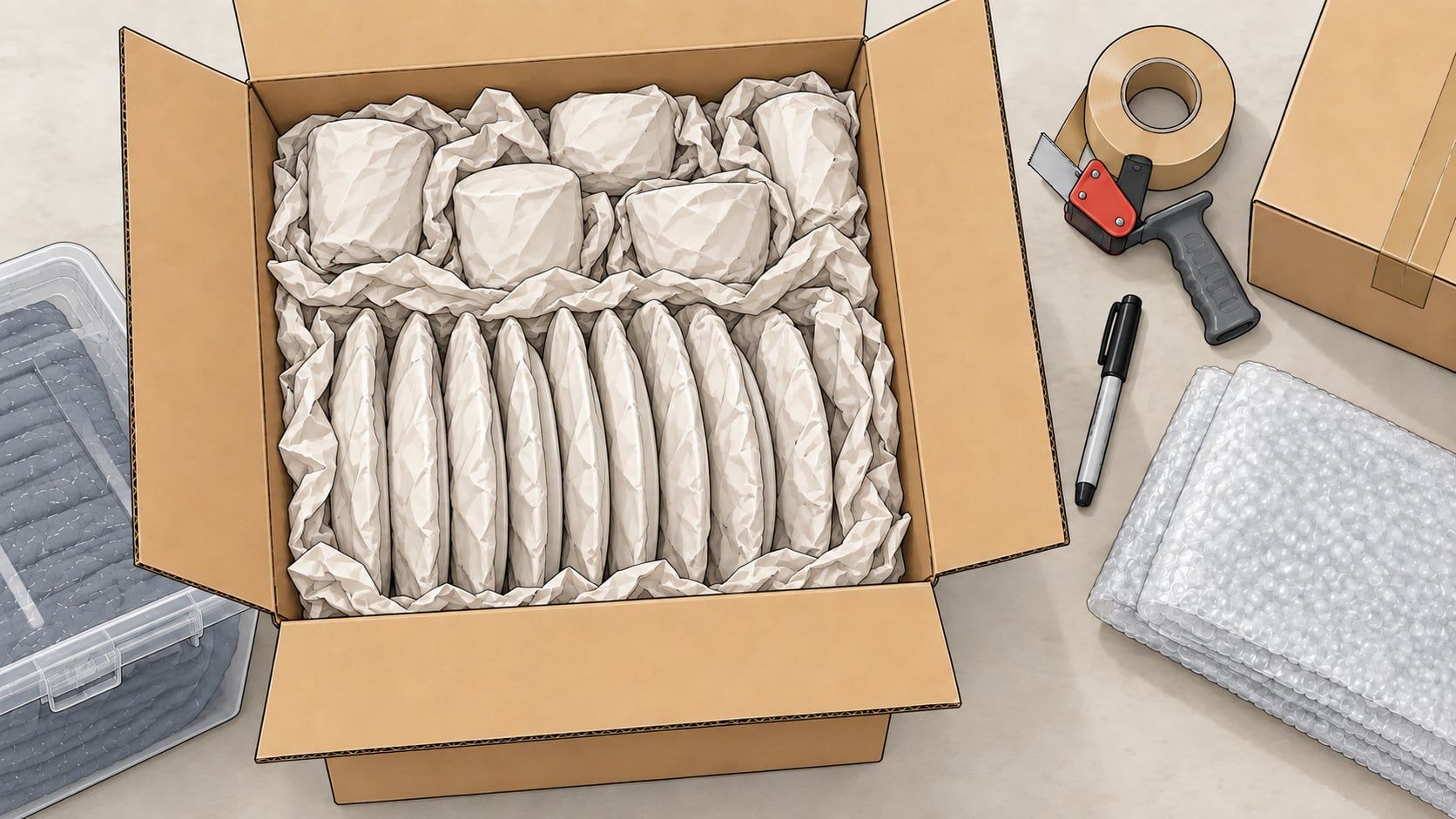
The boxes are flat-packed against the wall, the tape gun's on the counter, and the whole house is waiting to be sorted. How to pack for storage comes down to a handful of habits: sort what's going, pack it in sturdy boxes of a few sizes with the heavy things in the small ones, label every box on the top and two sides, keep a list, and load the unit with the heaviest and least-needed things first.
We're a family-owned business renting storage units in Rockport, Texas, and these storage unit tips are the habits that make coming back for something later quick and easy.
Decide what goes and what stays with you
Start by sorting. Anything you'll need in the next few weeks stays with you, along with important papers, medicines, keys and chargers. What goes into storage is everything you can live without until the move is done, the work on the house is finished, or the season turns. Our post on what a storage unit is for answers the common questions about what can go in one.
A few things stay home whatever the plan. Leave food, gas cans and propane tanks out of storage.
Go room by room, and give each room its own color of tape or marker. When the boxes come out later, the color tells whoever is carrying them which room they belong in.
Pack the rooms you use least first, the spare room, the closets and the garage shelves, and leave the kitchen and the bathroom for last. Set aside one box of the things you'll want on the first night after the move, the kettle, a few plates, towels and a change of clothes, and keep that box with you rather than in the unit.
Supplies for packing
Gather everything before you start, so the packing doesn't stop halfway through a room while someone goes back to the store:
- sturdy boxes in two or three sizes, with plenty of small ones
- packing tape and a tape gun
- a thick marker for labels, and colored tape or markers for rooms
- packing paper, old towels or blankets for padding
- furniture blankets for the bigger pieces
- small zip bags for screws and hardware
- a notebook, or a list on your phone, for what goes in each box
Boxes in a few standard sizes stack better than a mix of every shape the grocery store had, and a stack that's square on all sides stays put.
Packing boxes that stack and carry
Put the heavy things in small boxes and the light things in big ones. NIOSH's guidelines for manual material handling give 51 pounds as the most to be lifted with two hands under ideal conditions, and their advice for a load that's too heavy is to put fewer items in the container or use a smaller one. A small box of books is a box you can still lift at the end of the day.
Tape the bottom of every box with a strip along the center seam and one across each edge. Put the heaviest things at the bottom of each box and the lighter ones on top.
Fill each box to the top, so the lid sits flat and the box doesn't crush when another is stacked on it. Fill the gaps with packing paper or towels, and stop when the box is full rather than when it's bulging, because a bulging top won't take a box above it.
Pack one room per box where you can, so a box of kitchen things never ends up with a bathroom shelf's worth of bottles in it. It makes unpacking a lot quicker later.
How to store clothes in a storage unit
Wash or clean clothes and linens before they go in. The Canadian Conservation Institute's guide to flat storage for textiles, from the Government of Canada's conservation agency, is plain that textiles should be clean when they're stored.
The same guide says flat storage suits most textiles because it supports the whole piece, and that folding should be kept to a minimum. For a quilt or a good tablecloth you'd like to keep without creases, it suggests padding the folds with soft rolls of tissue or batting.
It also says to take out pins and staples, since they stress the fabric and are almost certain to rust, and to avoid piling textiles one on top of another where the weight can crush the ones underneath. So keep the boxes of linens on top of the heavier boxes, rather than under them.
Hanging clothes can go in wardrobe boxes, with the hangers on the rail, so they come out ready to hang again.
Dishes, glass and the breakables
Wrap each piece on its own in packing paper. Stand plates on their edges in the box, the way they'd sit in a dish rack, and put glasses and cups in the top layer with paper stuffed inside and around them.
Use small boxes for dishes, since a box of plates gets heavy fast, and fill every gap so nothing can shift. Write "Fragile" and "This side up" on the top and on the sides, and keep these boxes for the top of a stack.
Lamps travel with their shades off, each shade in its own box with paper around it. Mirrors and framed pictures get wrapped in a blanket and stand on edge, where nothing leans on the glass.
Small appliances, tools and garden things
Small appliances travel best in their original boxes if you still have them. Otherwise wrap each one in a towel, tape the cord to its side so it doesn't tangle, and pack them in a box with padding around them. Empty and clean out anything that has held food or water first.
Clean the soil off garden tools before they're packed, and wrap the blades of shears and saws in cardboard taped in place. Tie long-handled tools together in a bundle, so a rake and a shovel stand in a corner as one piece instead of sliding across the floor.
Anything with a fuel tank, like a mower or a trimmer, needs our written permission before it goes in, so call before moving day if one is on your list.
Books, papers and photographs
Books go in small boxes, packed flat or standing upright as they would on a shelf. A box of books gets heavy fast, and a small one is the size you can carry.
For papers, the National Archives suggests boxes big enough to hold them flat or upright without folding or bending, with a spacer board to fill out an upright box that's only partly full. Our post on climate-controlled storage goes into papers and photographs, and which ones belong in a climate-controlled unit.
Labels and a list
Label every box on the top and on two sides, so you can read it however it's stacked. Write the room, a few words about what's inside, and a number.
Keep a list of the numbered boxes and what's in each one, on paper or on your phone. Tape a copy inside the lid of the first box you'll see when the door opens, so the list is waiting in the unit when you need it.
A photo of each open box before it's taped takes a second, and it answers the question of which box the extension cords went into without opening six of them.
Keep a second copy of the list somewhere other than the unit, at home or in your email. Our post on renters insurance and storage units explains why a list and photos are worth keeping for your insurance too.
Packing for the damp on the coast
The EPA's guide to mold says there are many kinds of mold and none of them will grow without water or moisture. On this coast the air carries a lot of it: NOAA's long record for the Corpus Christi airport, southwest of Aransas County, has the average morning relative humidity between 85 and 93 percent in every month of the year.
So everything should be clean before it's packed, and anything washed, wiped or rained on should air out completely before it goes in a box.
Pack clothes, linens and cushions only once they've aired out, and empty and wipe out anything that has held water, like a cooler or a vase. Our post on preventing mold in a storage unit on the Texas coast goes into the rest.
How to pack a 10x10 storage unit
To pack a 10x10 storage unit, load the back wall first with the things you'll want least, put the big furniture along the walls, stack the boxes heaviest at the bottom, and keep an aisle or a patch inside the door for the things you'll want soon. How to pack a storage unit of any size follows the same order, and only the floor changes.
A 10x10 has 100 square feet of floor, and a sketch on graph paper before moving day shows whether your list fits with an aisle. Our post on how big a 10x10 storage unit is walks through the sketch, our post on what size storage unit you need for a one-bedroom apartment starts from a smaller list, and our Size Guide sets the sizes side by side.
Load the truck in reverse. The things for the back wall go on the truck last, so they come off first, and the boxes you'll want near the door go on first.
What to put on the floor of a storage unit
Put the heaviest and sturdiest things on the floor of a storage unit: furniture standing on its own feet, a mattress laid flat, and the heaviest boxes and bins as the bottom layer of each stack.
A mattress belongs on the floor with nothing on it. Sealy's advice on storing a mattress is to keep it as flat as possible with little to nothing stacked on top, and it warns that turning a mattress on its side can greatly compromise its structure.
If you'd like the bottoms of your boxes to stay clean, lay a drop cloth or a couple of flattened moving blankets down first and build the stacks on top of them.
How to organize a storage unit for visits
Organizing a storage unit is mostly a matter of putting the things you'll want often where you can reach them. Keep a path to the back if you'll be coming back for things, and put the seasonal boxes, the tools and the papers you might need near the door, at waist height.
NIOSH's guidelines call the space above the knees, below the shoulders and close to the body the power zone for lifting, which is the height for the boxes you'll handle most.
Group boxes by room, so the kitchen boxes stand together and the bedroom boxes stand together. With the room colors on the labels, you can see from the door where everything is.
Furniture goes against the walls, with blankets between pieces that touch. Our post on storing furniture in a storage unit covers cleaning, wrapping and loading each piece.
Take a photo from the door once everything's in. It's a map of the unit you'll carry in your pocket.
If the boxes will sit for months, plan a visit now and then to look things over and reach anything you've found you need. Our post on long-term storage goes into longer stays.
What are common storage unit mistakes?
The common storage unit mistakes come from packing for moving day and forgetting the day you'll come back, and each one has a plain fix you can make before the truck is loaded:
- Put heavy things in small boxes, so every box can still be lifted at the end of the day.
- Fill each box to the top, so it holds its shape under the box stacked on it.
- Label the top and two sides of every box, and give each one a number.
- Keep the things you'll need in the next few weeks with you.
- Let anything washed, wiped or rained on air out completely before it's packed.
- Keep an aisle, and put the things you'll want often near the door.
- Keep the mattress flat with nothing on it, and stand glass and mirrors on edge.
- Keep a numbered list, and tape a copy in the first box you'll see.
Moving day and getting in
Every unit on our property is at ground level, and the buildings have ramps at their entrances, so a hand truck or a dolly can carry the stacks of boxes straight in. A drive-up unit's door opens onto a concrete drive aisle, so you park at your unit door and unload a few steps.
You'll have your own gate code, and you can get in from 5 AM until 10 every night, seven days a week. If you rent online, your gate code is emailed to you after you finish, and it works right away. Our post on how to rent a storage unit goes through renting from start to finish.
Packing for a unit with us in Rockport
Rockport sits between Aransas Bay and Copano Bay, and 298 of our 558 units are climate-controlled. Our eleven single-level buildings went up between 2017 and 2025.
Siyata Storage is at 825 W Market Street. Some older listings show 835 — that is a separate private building next door, not us. The rate for every size we have open is on our price list. Emilio answers the phone 8 AM–5 PM Monday–Saturday, and we respond to every message during those hours.
It's a good feeling to roll up the door months later and find the box you came for right where the list said it would be.
Tell us what you're packing and we'll help you pick a size. Call 361-200-1492, 8 AM to 5 PM Monday to Saturday. Hablamos español.