
How to Store Furniture in a Storage Unit
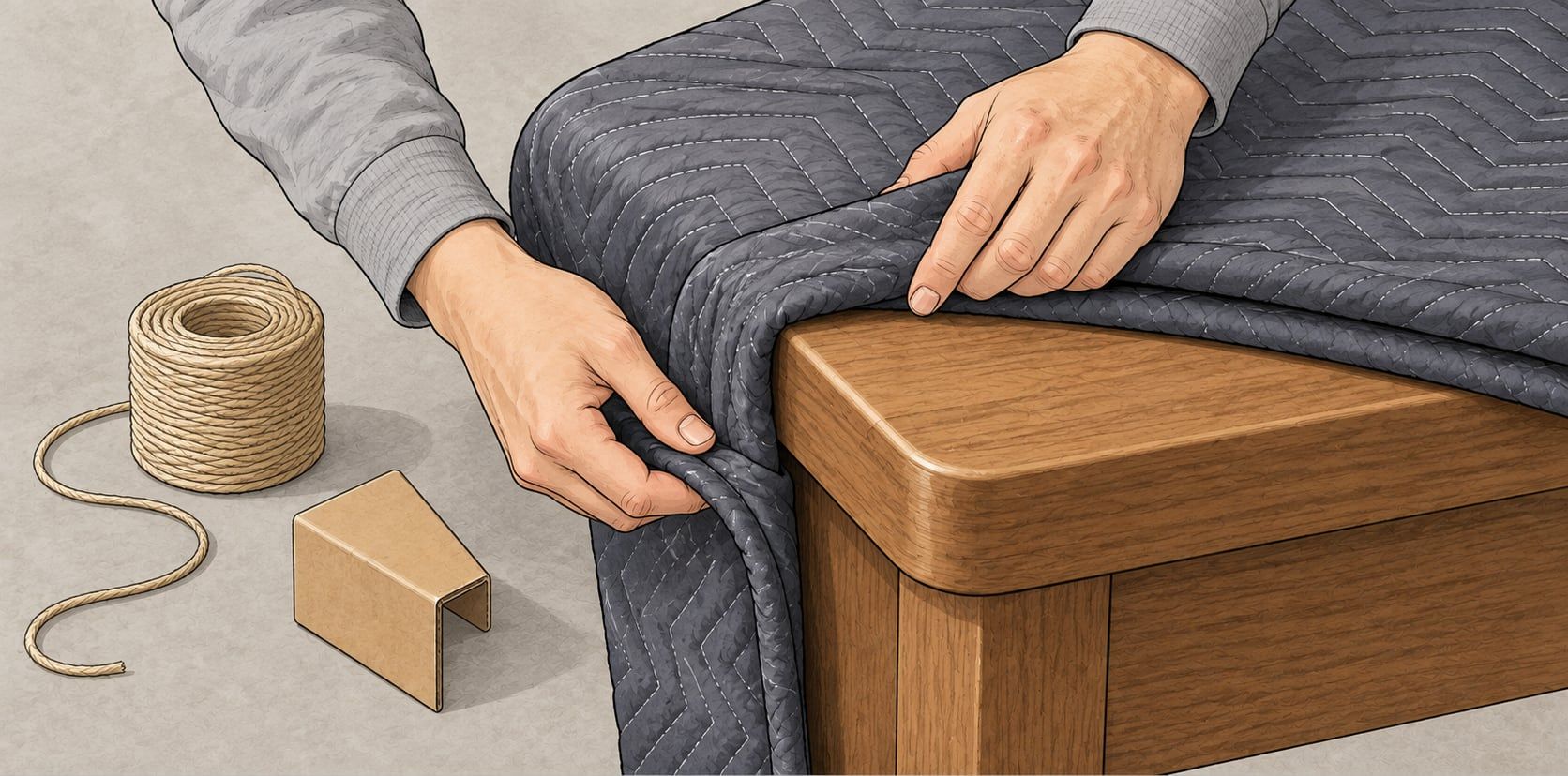
The kitchen's being redone, or the house is on the market, and the dining table that's sat in the same spot for years has to go somewhere for a while. How to store furniture in a storage unit comes down to a few steady jobs: clean each piece, take apart what comes apart, cover it loosely with cloth, and load it so the heavy pieces sit steady and you can still reach what you'll want.
We're a family-owned business renting storage units in Rockport, Texas, and we'd like the table to come back out looking the way it did the morning it left the house.
What decides how furniture comes through storage
The Canadian Conservation Institute, a Government of Canada agency, names two main causes of damage to wooden furniture: careless handling and environmental conditions. Whether your furniture comes out of storage the way it went in depends mostly on those two things.
Handling is the part that sits in your hands from the start: how each piece is cleaned, taken apart, lifted, covered and loaded, so nothing is bent, scraped or crushed along the way.
Conditions are the other part, and they're why some furniture belongs in a climate-controlled unit. Wood that's glued together and pianos are among the things that react to heat and cold, and our post on climate-controlled storage goes through which things need it and why.
Measure, photograph and list each piece
Before anything gets wrapped, walk through the house with a tape measure, a notepad and your phone. Measure each piece at its longest, deepest and tallest points, the arms of the sofa and the legs of the table included, and write the three numbers down.
Photograph each piece from a couple of sides while it's still uncovered. The photos show its condition the day it left the house, and they're a quick reminder later of which cushion went where and how the bed frame went together.
Number the pieces on your list, and put the same number on a strip of tape on the back of each one. When the unit is full and everything is under a sheet, the numbers tell you which shape is the hall table without lifting every cover. Our post on renters insurance and storage units explains why a list and photos are worth keeping for your insurance as well.
Furniture storage supplies to have ready
A little preparation saves a lot of scrambling once the truck is loaded. Have these ready before moving day:
- furniture blankets, enough for one between every two pieces that will touch
- clean cotton sheets or old bedspreads to cover each piece in the unit
- small zip bags, a marker and tape for the hardware from each piece
- soft cotton straps or cord to hold doors and drawers that stay in
- a roll of plastic sheeting for the trip, if rain is likely
- a tape measure, a hand truck or furniture dolly, and a pair of work gloves
Clean each piece before it goes in
Start with a clean piece. Brown Jordan's care guide, from a maker of outdoor furniture, says to clean all furniture before storing it, to keep stains from setting and materials from breaking down.
For wood, the institute's advice is to dust with a slightly dampened cloth and then buff with a soft cloth. Pieces made before the First World War are sensitive to water, so dust those with a cloth that has no water on it at all.
You don't need to oil or polish wood before it goes into storage. The institute says that, contrary to popular belief, wood does not need to be "fed", and that some furniture polishes leave residues that build up and can affect finishes.
Take metal handles and pulls off before you clean them, if you clean them at all. The institute warns that the abrasives or ammonia in metal cleaners can damage the wood and finish around the hardware.
For upholstered pieces, the National Park Service's guide to upholstered furniture recommends vacuuming regularly on low suction if the fabric is in good condition. If the fabric is fragile, it says to leave it alone and ask a conservator. A fresh spill gets blotted with a clean white cotton cloth, as much as it will lift.
Leather needs less than you might expect. For the leather in museum collections, the institute's guide to caring for leather advises against oiling it, warning that in time oils oxidize and can stiffen and darken it further. Before a leather chair or sofa goes into storage, a wipe with a soft, clean cloth is enough, and a cotton sheet over it keeps the dust off.
Let anything you've washed or wiped air out completely before it's covered or loaded.
Take apart what comes apart
Taking furniture apart makes it lighter to carry, easier to stack and less likely to break at a joint. Before moving any piece, the institute says to check it for damage or loose joints, then remove everything from its surfaces and take out the drawers, shelves and doors.
Anything that can't be taken out, it says, should be held in place with soft cotton straps. A marble top comes off and travels standing on edge, the institute adds, and the same care makes sense for a glass tabletop.
Take the legs off tables and the rails off bed frames where they unscrew. Put the screws, bolts and brackets for each piece in their own bag, label the bag, and tape it to the underside of the piece it came from, so the right hardware is with the right furniture when it comes out.
If a cabinet or desk locks, tape its keys inside an envelope to the back of the piece, or keep them with your list, so they come out of storage with it.
Photograph anything you'll have to put back together before you take it apart. A picture of the back of a bed frame or the underside of a table saves a long evening with the instructions later, or the lack of them.
Should you wrap furniture in plastic for storage?
Cover furniture loosely with cloth rather than sealing it tight in plastic. The National Park Service's conservators cover upholstered furniture with clean cotton sheets when it's not in use, and even Sealy, which allows plastic around a mattress, advises against airtight packaging or vacuum-sealing one.
The best material to cover furniture in storage is clean cotton, a sheet or an old bedspread, with a furniture blanket where a piece needs padding as well, and any of them keeps the dust off. The Park Service notes that dust is abrasive and, over time, can damage the finish on exposed wood, so a cover earns its place even on a piece that will only be in storage for a few months.
Plastic has its job on moving day, when a sudden shower can catch a sofa between the house and the truck. Once the piece is inside the unit, take the plastic off or open it up, and put a cloth cover on instead.
Wrapping a couch for storage is fine in a cotton sheet or a furniture blanket, put on loosely, with the cushions covered the same way, and the plastic kept for the trip.
How to protect furniture in storage
To protect furniture in storage, wrap furniture for storage in cloth covers and blankets, carry each piece by its strongest point, keep hard surfaces apart, keep heavy boxes off fine finishes, and leave the covers on against dust and light.
It starts with how you carry it. The institute's rule is to pick a piece up at its strongest point, lifting a table by the apron or the legs rather than the top, and grasping a chair by the seat rather than the back or arms. It also says to lift furniture rather than drag it, since dragging puts extreme stress on the legs and feet and can break them off or pull the joinery apart.
The Park Service adds three things for upholstered pieces: measure the door openings before the move, make sure there's plenty of help, and grasp the piece by its legs rather than the upholstered surfaces where you can.
Inside the unit, keep hard surfaces from touching. Put a folded furniture blanket between two pieces that stand side by side, and between a dresser and the wall. If a glass top goes on a table again later, the institute suggests small felt tabs between the glass and the wood so the glass doesn't stick to the finish.
Keep heavy boxes off good finishes. A box of linens can sit on a dresser top under a blanket, while a box of books belongs on the floor, since whatever sits on a finish rests there for months at a time.
Light fades fabric and wood finishes, and the Park Service describes light damage as cumulative and irreversible. The institute adds that light can turn light woods dark and bleach out dark woods, and leave a finish discolored, opaque, cracked or brittle. A cover over a piece keeps it in the dark between visits, which is one more reason the cotton sheet stays on.
Piece by piece
Sofas and couches
Vacuum the cushions and frame, cover the sofa with a cotton sheet, and keep it on its feet with nothing heavy stacked on the seat. Bag or cover the loose cushions and stand them where they'll keep their shape.
How to store a mattress in a storage unit
Sealy's advice on storing a mattress is to keep it as flat as possible with little to nothing stacked on top, and it warns that turning a mattress on its side can greatly compromise its structure. It may be wrapped in plastic, Sealy says, though not airtight or vacuum-sealed.
Dining tables and chairs
Take the legs off if they unscrew. For the trip, the institute says tables are best transported top-down on a cushion, and that furniture in a vehicle should be cushioned from the vehicle and from each other. Chairs stack seat to seat with a blanket between them.
Dressers, cabinets and chests
The institute says cabinets should travel empty and upright, wrapped in a cushion tied with a soft cord so the empty drawers stay in place. Once it's standing in the unit, light, soft things can go back in the drawers.
Bed frames and headboards
Take the rails off the headboard and footboard, bag the bolts with a label, and tape the bag to the headboard. Cover the headboard with a blanket and stand it against a wall, and tie the rails together so they travel and stand as one bundle.
Mirrors and framed pieces
Wrap each one in a furniture blanket, stand it on edge rather than laying it flat under other things, and keep it against a wall or a sturdy piece where nothing will lean on its face. Write which side is the glass on the outside of the wrapping.
Wicker and rattan
Vacuum wicker with a soft brush attachment, cover it with a cotton sheet, and keep it out from under anything heavy, since a woven seat or back gives way under a load it was never made to carry. Stand it upright on its own feet.
Bookcases and shelving
Take out the shelves and wrap them together, and bag the shelf pins. Stand the bookcase upright against a wall with a blanket behind it.
Glass and marble
Tops come off and travel separately, standing on edge, wrapped in blankets. Mark the wrapping so nobody stacks anything against them.
Antiques and old finishes
The institute calls original finishes part of a piece's historical value and says that once an original finish is removed, it can't be put back. Clean these pieces gently and keep them covered, and since most are wood and glue, they belong in the climate-controlled unit with the rest of the wood furniture.
Patio furniture
Clean it first. Brown Jordan says to clean cushions with mild soap and water, rinse them thoroughly and let them air out standing upright, and for frames it recommends a coat of clear automotive wax a few times a year against UV and salt air, more often in coastal or humid climates. Patio sets also suit a drive-up unit, where you park at your unit door and unload a few steps.
Pianos
A piano belongs in a climate-controlled unit, for the reasons Yamaha gives in its own care guide, which our climate-controlled storage post goes through.
How to store furniture in climate-controlled storage
To store furniture in climate-controlled storage, prepare it exactly as you would for any unit: clean it, take it apart, cover it loosely with cloth, and load it with blankets between the pieces. How to pack furniture for climate-controlled storage is the same job, done for the pieces that react most to heat and cold.
Our climate-controlled units are interior units on an HVAC system, held within a steady temperature range. Each one is inside its building, and you reach it through the building entrance, so on moving day you roll the furniture in on a hand truck or a dolly.
Put the wood furniture, the antiques and the piano in the climate-controlled unit, and let the patio set and the garden tools go in a drive-up unit if you're renting two.
Moving day on the coast
Plan around the weather. NOAA's climate normals for the Corpus Christi airport, southwest of Aransas County, make September the wettest month of the year there, averaging 5.42 inches of rain, with June next at 3.56.
Keep a stack of furniture blankets and a roll of plastic sheeting in the truck for the trip. If a piece does get rained on, wipe it down and let it air out completely before it's covered and loaded.
On a hot day, start early. The National Weather Service's heat advice is to reschedule strenuous activity to the coolest time of the day and to drink plenty of water even if you don't feel thirsty.
Loading furniture into the unit
Big furniture goes in first, along the back wall and the sides, with the heaviest pieces on the floor. Boxes go in front of it and on top of the sturdy pieces that can take the weight, never on a glass or marble top.
Leave an aisle if you'll want anything before the end of the stay. Our post on how big a 10x10 storage unit is shows how to sketch the floor first, and our Size Guide sets the sizes side by side. The rate for every size we have open is on our price list.
Our post on packing for storage goes into the boxes and the loading order around the furniture.
Leave food, gas cans and propane tanks at home, and anything with a fuel tank needs our written permission before it goes in.
A last look before the door comes down
Before you pull the door down on a full unit, run through it once. Every piece went in clean, and anything you washed had time to air out. The hardware for each piece is bagged and taped to it, and the drawers are empty or holding only light, soft things.
The covers are cloth, loose enough to let the piece breathe, and the moving plastic is off. Blankets sit between every two pieces that touch, the heavy boxes are on the floor, the mattress is flat with nothing on it, and the glass and marble stand on edge.
The aisle is clear if you left one, your list matches what's inside, and you've taken one more photo from the door. It takes a few minutes at the end of a long day.
Checking on furniture while it's stored
The institute's advice for anything in storage is to look things over now and then, to make sure they're still covered, well supported and where they belong. Lift a cover, look at the finish and the joints, and put the cover back.
Vacuum upholstered pieces on low suction while you're there, as the Park Service suggests for fabric in good condition. If a long stay is ahead, our posts on long-term storage and preventing mold in a storage unit on the Texas coast cover the rest.
Bringing it back out
Unloading runs the same job in reverse. Take the boxes out first, then the furniture from the front of the unit to the back, lifting each piece at its strongest point the way it went in.
Check each piece against the photos as it comes out, and put the bed frames and tables back together with the hardware from their own bags. Leave the covers on until the furniture is inside the house, so it travels clean.
Storing furniture with us in Rockport
Rockport sits between Aransas Bay and Copano Bay, and 298 of our 558 units are climate-controlled. Our eleven single-level buildings went up between 2017 and 2025, every unit is at ground level, and the buildings have ramps at their entrances.
You'll have your own gate code, and you can get in from 5 AM until 10 every night, seven days a week. If you rent online, your gate code is emailed to you after you finish, and it works right away. The climate-controlled buildings have an after-hours alarm with live monitoring that alerts police, and it's set shortly after 10 PM, so plan to finish inside before then.
Siyata Storage is at 825 W Market Street. Some older listings show 835 — that is a separate private building next door, not us. Emilio answers the phone 8 AM–5 PM Monday–Saturday, and we respond to every message during those hours.
When the dining table comes back out with its legs in the bag taped underneath and the top just as you left it, the hot afternoon you spent wrapping it is easy to be glad of.
Tell us what furniture you're storing and we'll help you pick a size. Call 361-200-1492, 8 AM to 5 PM Monday to Saturday. Hablamos español.