
What Size Storage Unit for a 2-Bedroom Apartment or House?
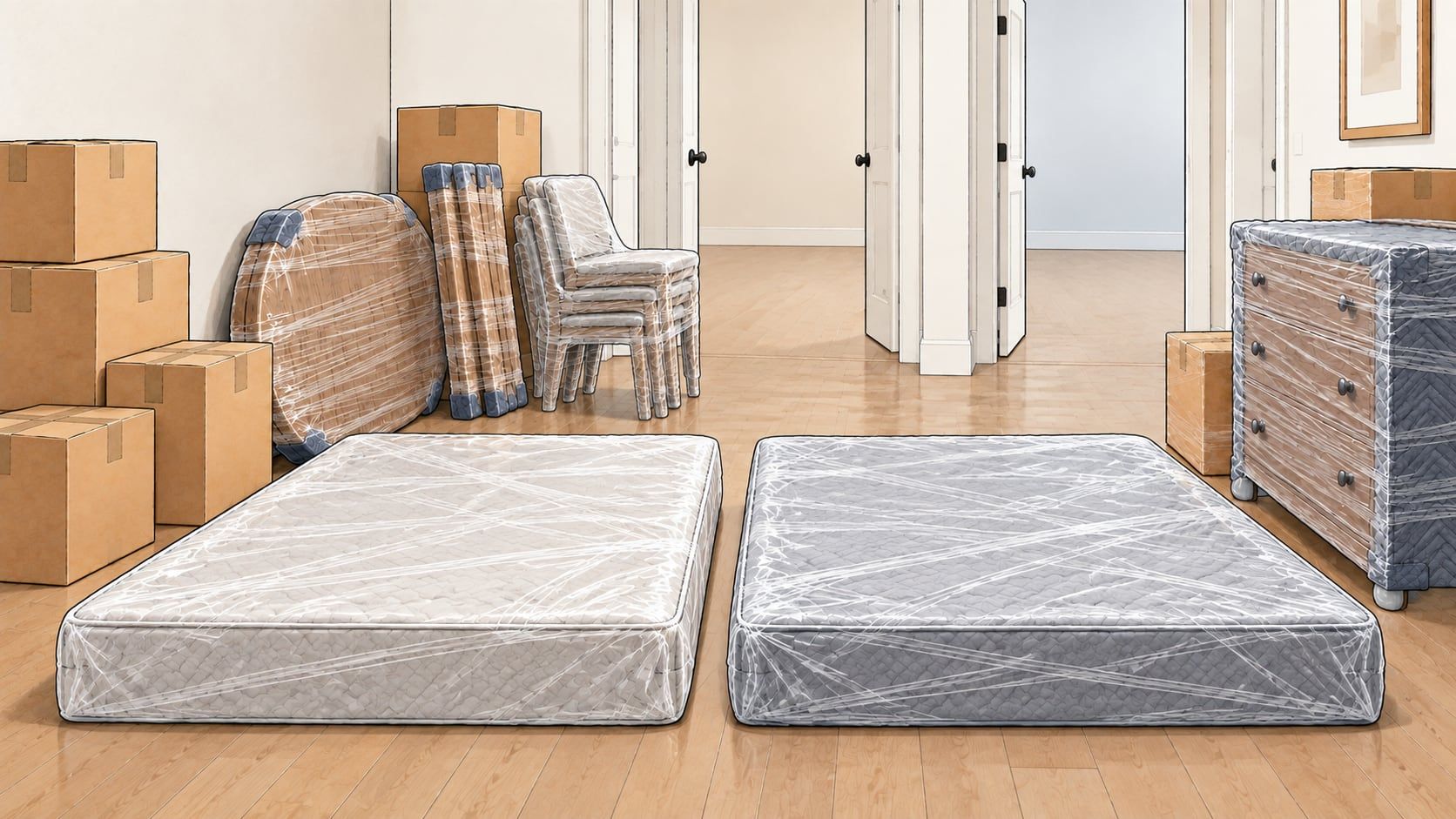
The lease is up at the end of the month, the new place isn't ready, and everything in a two-bedroom apartment has to sit somewhere in between. What size storage unit for a 2-bedroom apartment comes down to the floor your things will cover, and the worked list below, from a two-bedroom apartment with its own appliances, comes to about 160 square feet, which is a 10x20, with a narrow path down one side.
We're a family-owned business renting storage units in Rockport, Texas, and the quickest way we know to settle a size is to count what's going, measure the big pieces, and add up the floor.
Start with what's in the two bedrooms
Walk through the place room by room with a notepad and a tape measure. In each bedroom, write down the bed, the dressers and nightstands, any desk or bookcase, and the closet's worth of clothes and boxes.
Then the living room, with the sofa, chairs, tables, the television stand and the lamps, and the kitchen, with the table and chairs, the dishes, and the appliances if they're yours. Finish with the closets, the bathroom shelves and anything on a balcony or patio.
Measure the big pieces at their longest, deepest and tallest points. The small things you'll pack into boxes, so for those, count the boxes instead.
Measure the doorways and the stairwell at home too, because a piece has to leave the apartment before it can go into a unit. The National Park Service's guide to upholstered furniture gives the same advice for moving a sofa: measure the door openings before the move, make sure there's plenty of help, and grasp the piece by its legs rather than the upholstered surfaces where you can.
Turning the list into square feet
Floor is the number that decides the size. Multiply each big piece's length by its depth, in feet, and write the answer beside it. Boxes stack, so a stack of four boxes takes the floor of one.
Makers publish the sizes of the pieces that take the most floor. Sealy's mattress size guide gives a queen as 60 inches wide and 80 inches long, about 33 square feet, a full as 54 inches by 75, about 28, and a twin as 38 inches by 75, about 20.
Mattresses take more floor in storage than you might expect, because they're meant to lie flat. Sealy's advice on storing a mattress is to keep it as flat as possible with little to nothing stacked on top, and it warns that turning a mattress on its side can greatly compromise its structure.
A sofa is next. La-Z-Boy's Kennedy Sofa, as one example, measures 77 inches wide and 38 inches deep, which is about 20 square feet of floor.
If the appliances are yours, Whirlpool's refrigerator size guide puts standard refrigerators between 24 and 40 inches wide and 28 and 37 inches deep, and its laundry sizing guide puts a side-by-side washer and dryer set at about 54 inches wide and 32 to 34 inches deep, roughly 12 to 13 square feet for the pair.
Room by room: what each room adds
It helps to add the list up one room at a time, because each room settles into a rough size of its own once you've decided how each piece will be stored.
Start with the main bedroom. A queen mattress laid flat is about 33 square feet, the bed frame comes apart into rails and a headboard that stand against a wall, and a dresser 5 feet wide and 2 feet deep adds 10. Nightstands stack on each other, and the closet goes into boxes. Say 50 square feet for the room, before its boxes.
The second bedroom depends on what it's been used for. As a guest room with a full mattress and a dresser, it's about 40 square feet. As a study, a desk 4 feet by 2 adds 8, a bookcase stands against a wall with its shelves wrapped beside it, and the papers go in small boxes.
The living room comes down mostly to the sofa. The Kennedy Sofa's 77 inches by 38 is about 20 square feet, an armchair about 3 feet square adds 9, and a coffee table with its legs off stands on edge. The television, the lamps and the side-table things go in boxes, padded well.
The kitchen and dining area is small in floor and large in boxes. A table with its legs off stands on edge, the chairs stack in pairs, and the dishes go in small, heavy boxes. If the refrigerator is yours, add about 8 square feet for it standing upright.
The laundry adds 12 to 13 square feet if the washer and dryer are yours, and nothing if they belong to the building. Add the boxes at the end, by counting them and dividing by how high you'll stack them.
The boxes are the hardest part to guess before you've packed. A good way to get the number is to pack one room completely, count its boxes, and use that count to estimate the rooms that are left. Count the kitchen and the closets on their own, cupboard by cupboard and shelf by shelf, since that's where the boxes add up.
A worked two-bedroom list
Here's one two-bedroom apartment, worked through. Your list will differ, and the way to use this one is to swap in your own pieces and measurements.
| Item | How it's stored | Floor, square feet |
|---|---|---|
| Queen mattress | Flat, nothing on top | 33 |
| Full mattress | Flat, nothing on top | 28 |
| Two bed frames and headboards | Rails bundled, headboards against a wall | 4 |
| Sofa, 77 inches wide and 38 deep | On its feet, covered | 20 |
| Two dressers, 5 feet by 2 | Against a wall, light boxes on top | 20 |
| Dining table and four chairs | Legs off and top on edge; chairs stacked in pairs | 11 |
| Refrigerator | Upright, doors propped open | 8 |
| Washer and dryer | Side by side | 13 |
| 40 boxes, 18 inches square | Four high, ten stacks | 23 |
| Total | about 160 |
The total of about 160 square feet is more than a 10x15's 150, and it fits inside a 10x20's 200 with room for a narrow path down one side.
Two things push this list up. The mattresses, laid flat as Sealy advises, take 61 square feet between them, and the appliances add another 21. Without the appliances, the same list comes to about 139 square feet.
What size storage unit for a 2-bedroom apartment
For a two-bedroom apartment, appliances included, plan on a 10x20: the worked list of about 160 square feet fits with a narrow path down one side. If you'd like to walk the whole length freely, a 15x20 gives that room.
Picture the loaded 10x20 from the back: the refrigerator and the washer and dryer against the back wall, the two mattresses flat across the width in front of them, then the dressers, the sofa, the table and chairs and the boxes toward the door, everything set against one long wall with a narrow path down the other.
A 10x15 has 150 square feet of floor and a 10x20 has 200, and our post on how big a 10x15 and a 10x20 are goes through both. The 10x15 page and the 10x20 page are where to rent either one.
It's a strange feeling to see a whole apartment's worth of furniture reduced to paper shapes on a kitchen table, and a good one when they all fit.
Whichever you lean toward, sketch it first. On graph paper, one square to a foot, draw the floor and cut out paper shapes for the big pieces at the same scale. If they sit with room for the boxes and a path, the size will work.
Timing matters as much as size when an apartment lease is ending. Ask about the minimum term before you rent a unit, wherever you rent, and if the gap between homes might stretch, a lease that continues month to month once its minimum term is met lets the stay run on while you wait.
Our post on how to rent a storage unit goes through renting online, the lease and moving out, and the one on moving storage covers storage between homes.
If your 2-bedroom apt has very little furniture and most of what you have is boxes, a smaller unit can work, since boxes use the height. Our post on what size storage unit you need for a one-bedroom apartment starts from a smaller list.
A worked list for a two-bedroom house
For a two-bedroom house in Rockport with a garage and a patio set, plan on a 15x20: the worked house list below comes to about 199 square feet, which leaves room to walk in a 15x20 and only just fits a 10x20 with no path. It's the apartment's list with the garage and the patio added.
| Item | How it's stored | Floor, square feet |
|---|---|---|
| Everything from the apartment list | As above | about 160 |
| Two bikes | Upright, side by side | 12 |
| Tool chest, 3 feet by 2 | Against a wall | 6 |
| Long-handled tools | Tied in one bundle in a corner | 2 |
| Fishing rods, tackle and coolers | Rods along a wall; coolers empty and aired out | 8 |
| Patio table and four chairs | Table on edge; chairs stacked | 11 |
| Patio cushions | Boxed or bagged, on top of a sturdy stack | 0 |
| Total | about 199 |
The total of about 199 square feet fits a 15x20 with room to walk, and that's the size to plan on. As a measured note, it only just fits the 200 of a 10x20, with no path at all, and a lawn mower would take it past.
Will a 10x10 storage unit hold a two bedroom house?
A 10x10 storage unit holds the boxes and a room or so of furniture from a two-bedroom house, though not the whole of the house in the worked list here. In the worked list, the two mattresses laid flat would cover 61 of its 100 square feet before anything else went in.
A 10x10 has 100 square feet of floor, 10 feet on each side, and our post on how big a 10x10 storage unit is goes into what that looks like. It suits a move where most of the furniture is staying behind or going straight to the new place, and only the boxes and a few pieces need a home for a while.
If you're torn between a 10x10 and something larger, the sketch is the surest check. Draw both floors on the same sheet and put the same paper shapes in each.
The garage and patio of a Rockport house
A two-car garage's worth of tools, bikes and lawn gear is worth a list of its own. In the worked house list the garage things come to about 28 square feet before a lawn mower, and a fuller garage can need a 5x10 or a 10x10 of its own.
A two-bedroom house carries more than its two bedrooms, so take that list out to the shed and the patio as well, where the fishing rods, the coolers and the patio cushions tend to live.
Bikes and long tools take more floor than their weight suggests. Measure each bike from wheel to wheel and across the handlebars, and tie rakes and shovels into a bundle that stands in a corner. Fishing rods are long, so check them against the unit's length, or across its diagonal, which in a 10x20 is a little over 22 feet.
A garage seems to hold more the longer you look at it, and it makes a hard last job on a hot afternoon, so start on it early.
Patio furniture should go in clean. Brown Jordan's care guide says to clean all furniture before storing it, to keep stains from setting and materials from breaking down.
Empty and wipe out the coolers and anything else that has held water, and let them air out before they're packed. A lawn mower or anything else with a fuel tank needs our written permission before it goes in, and food, gas cans and propane tanks stay at home.
If the refrigerator is going with you, Whirlpool's advice for moving one is to keep it upright at all times and use a dolly rated for its weight, and for a long stretch unplugged, to prop the doors open with a towel to prevent mildew once it's empty. Our post on packing for storage covers the tools and the garden things.
The sizes side by side
Here are the sizes that matter most for a two-bedroom move, with the floor each one gives you and how the worked lists fit.
| Size | Floor, square feet | The apartment list (about 160) | The house list (about 199) |
|---|---|---|---|
| 10x10 | 100 | Boxes and a room or so of furniture | The boxes and a room |
| 10x15 | 150 | About 10 square feet short | About 50 square feet short |
| 10x20 | 200 | All of it, with a narrow path (the pick) | Only just, with no path |
| 15x20 | 300 | All of it, with room to walk | All of it, with room to walk (the pick) |
For the apartment, the pick is the 10x20, and for the house, the 15x20.
Our Size Guide sets the sizes side by side, and the rate for every size we have open is on our price list.
What size storage unit for a 3 bedroom house?
For a three-bedroom house, add the third bedroom to the worked list and the answer is a 15x20. Our largest size, the 15x20, is 300 square feet.
Adding a third bedroom with a twin mattress, a dresser and ten more stacks of boxes adds about 50 square feet to the apartment list, for about 210 in all. That's a little more than a 10x20's 200, so a 10x20 holds it only if some of it stacks higher or stays behind.
The 15x20, with half as much floor again as a 10x20, holds that three-bedroom list with a path down the middle.
Add the garage and patio from the house list, about 39 square feet more, and a three-bedroom house with a garage comes to about 250. That's a 15x20 with a path down one side, or a 10x20 with a second, smaller unit for the garage things.
For a four-bedroom house, add the fourth bedroom the same way, about 50 square feet more, and the list with a garage comes to about 300, the whole floor of a 15x20. Plan on a 15x20 and a second, smaller unit, so there's room for a path.
If a three-bedroom house has a garage, a shed and a patio set, two units can be easier than one large one, especially if some of it belongs in a climate-controlled unit and the rest in a drive-up unit.
Square feet of house and square feet of storage
A house's square footage is a poor guide to the storage you'll need, because a house measures its rooms and a storage unit measures what's in them. A 1,500-square-foot house with a lot of furniture can need more storage than a larger one that's sparsely furnished.
Count the pieces instead. The furniture and boxes from a 1,500-square-foot house might need a 10x15, a 10x20 or more, and the only way to know is to make the list and add up the floor.
Height, stacking and what stays flat
Boxes and totes use the height of a unit, and furniture mostly doesn't. Stack boxes with the heaviest at the bottom and the lightest on top, keep each stack straight, and put the boxes you'll want often near the door, at waist height.
The mattresses stay flat with nothing on them, and glass and marble tops stand on edge, wrapped, where nothing will lean on them. Light, soft boxes of linens can sit on top of a dresser under a blanket.
Measure your tallest pieces, the wardrobe, the bookcase and the headboard, and check them against the unit's door and ceiling when you arrive.
Totes count the same way boxes do. Sterilite's 27-gallon Industrial Tote measures 28 1/2 inches long and 19 5/8 inches wide on the outside. Laid out across a 10x15's floor, 36 of them fit in a single layer, and across a 10x20's, 48, before you leave a path. Each layer you stack adds that many again.
NIOSH's guidelines for manual material handling give 51 pounds as the most to be lifted with two hands under ideal conditions, and their advice for a load that's too heavy is to put fewer items in the container or use a smaller one. So the books and dishes from two bedrooms go in small boxes, however many it takes.
When two units make sense
Some of what's in a two-bedroom home reacts to heat and cold, and some doesn't. Wood furniture, a piano, photographs, papers and the television are among the things that belong in a climate-controlled unit, and our post on climate-controlled storage goes through why. The Canadian Conservation Institute, for one, warns that heat softens white glues until they lose their strength, and that pieces of wood joined with them can come apart.
The garage tools, the patio set and boxes of everyday household goods suit a drive-up unit, where you park at your unit door and unload a few steps. Splitting a two-bedroom list between the two kinds can mean two smaller units in place of one large one.
Using the worked house list as an example, the bedroom and living room furniture, the dining set and the boxes of papers and photographs could go in a climate-controlled 10x15, and the garage, the patio set and the appliances in a drive-up unit. Each unit then holds the things that suit it, and each one is easier to load than a single crowded one.
Loading a two-bedroom household into the unit
In a longer unit, load the far end first with the things you'll want least, and work toward the door. Put the mattresses flat along one side, the sofa and dressers against the walls, and the boxes in stacks you can reach.
If you'll want things during the stay, keep a path down one side of the unit, not the middle, so the stacks have a wall at their backs.
Load the truck in reverse, so the things for the far end come off first. Put the boxes you'll want during the stay on the truck first, so they come off last and end up nearest the door, and keep the dressers and the tool chest where you can open a drawer without moving anything.
Our post on storing furniture in a storage unit covers wrapping and loading each piece, and the one on packing for storage covers the boxes and labels.
Sizes for a two-bedroom move, with us in Rockport
Rockport sits between Aransas Bay and Copano Bay, and 298 of our 558 units are climate-controlled. Our eleven single-level buildings went up between 2017 and 2025, every unit is at ground level, and the buildings have ramps at their entrances.
You'll have your own gate code, and you can get in from 5 AM until 10 every night, seven days a week. If you rent online, your gate code is emailed to you after you finish, and it works right away.
Siyata Storage is at 825 W Market Street. Some older listings show 835 — that is a separate private building next door, not us. Emilio answers the phone 8 AM–5 PM Monday–Saturday, and we respond to every message during those hours.
Once the paper shapes fit inside the square on the page, moving day is one less thing to lie awake over.
Tell us what's in the two bedrooms and we'll help you pick a size. Call 361-200-1492, 8 AM to 5 PM Monday to Saturday. Hablamos español.